 No Ground
Stars do not usually let us watch them die, and they almost never let us watch them eat each other. This one did.
In a paper published Wednesday, Nov. 18, 2026, in the journal Nature, a team led by Viraj Karambelkar, a NASA Hubble Fellow at Columbia University, describes a giant star in the Andromeda galaxy that swallowed its smaller companion. The researchers followed the pair for years before the end, caught the final eruption in October 2025, and then pointed NASA’s James Webb Space Telescope at the aftermath. NASA calls it a first of its kind, and Karambelkar told ABC News it marks the first time a giant star was “caught in the act” of engulfing its companion.
The astronomers nicknamed the giant “Big Bao” and its victim “Little Bao,” after the event’s official catalog name, AT 2025abao. What is left today is a single star they now simply call Bao.
What astronomers actually saw
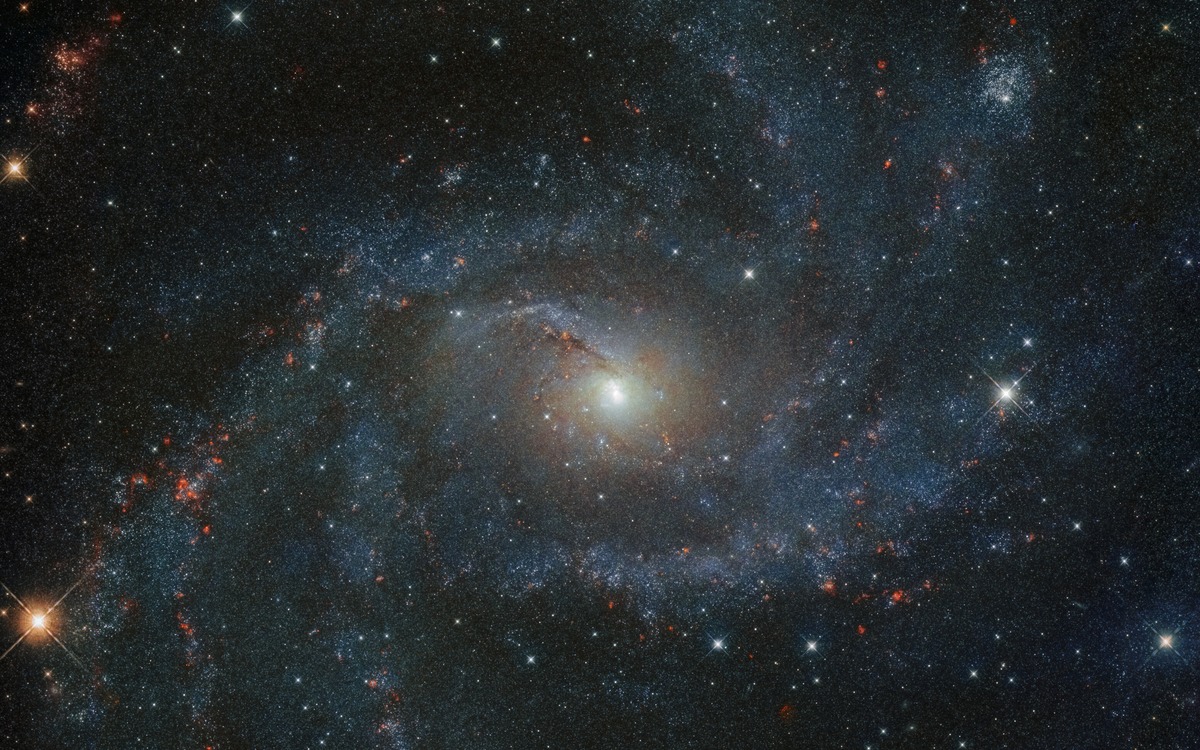
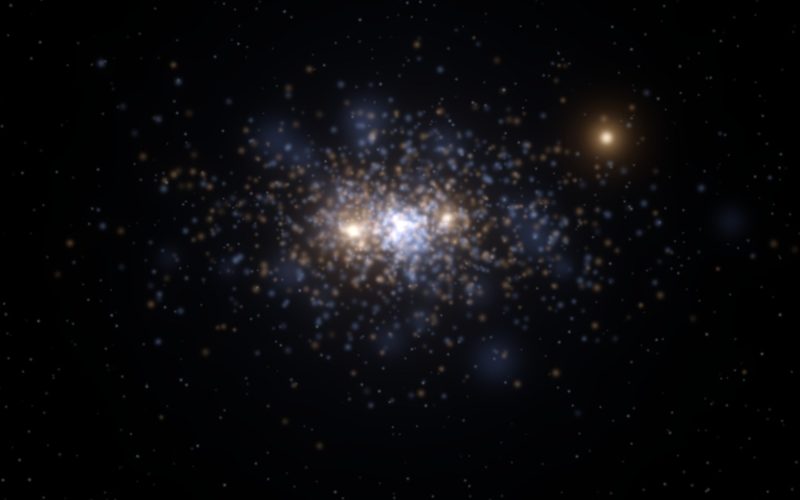
Bao sits on the outskirts of Andromeda, the nearest big galaxy to our own Milky Way, about 2.5 million light-years away. From that far, even a giant star is just one faint point of light among billions, so nobody saw two separate stars. What the team saw was a single dot that kept changing.
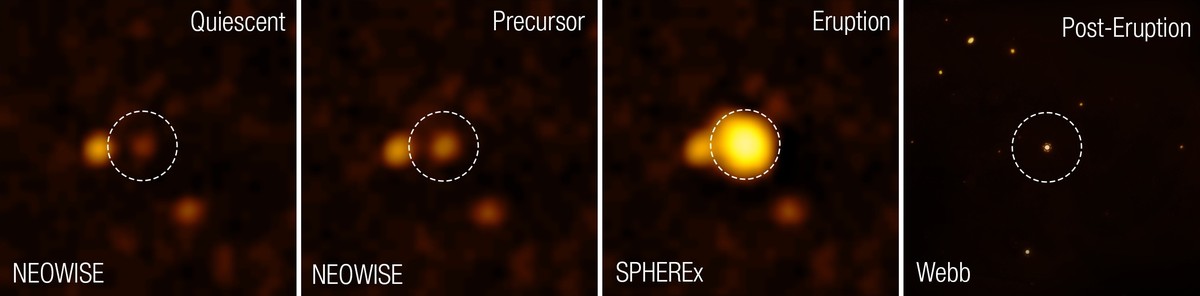
The first clue came in February 2023, when the researchers noticed an unusual variable star in data from NASA’s NEOWISE mission, an infrared space telescope that has since been retired. Going back through older observations, they found that the star had stayed steady for years and then started slowly getting brighter around 2018. Science News reports that over those years it swelled to more than twice its earlier size while its surface temperature barely changed.
That slow glow was the giveaway. The team proposed that a smaller star had come into contact with the giant’s outer layers and was being dragged inward. Then the system did exactly what that idea predicted. On Oct. 17, 2025, the Zwicky Transient Facility, a survey camera in California, caught it erupting. “One day, its brightness started rising and within a week, it peaked!” said co-author Nadia Blagorodnova of the University of Barcelona.
How does one star swallow another?
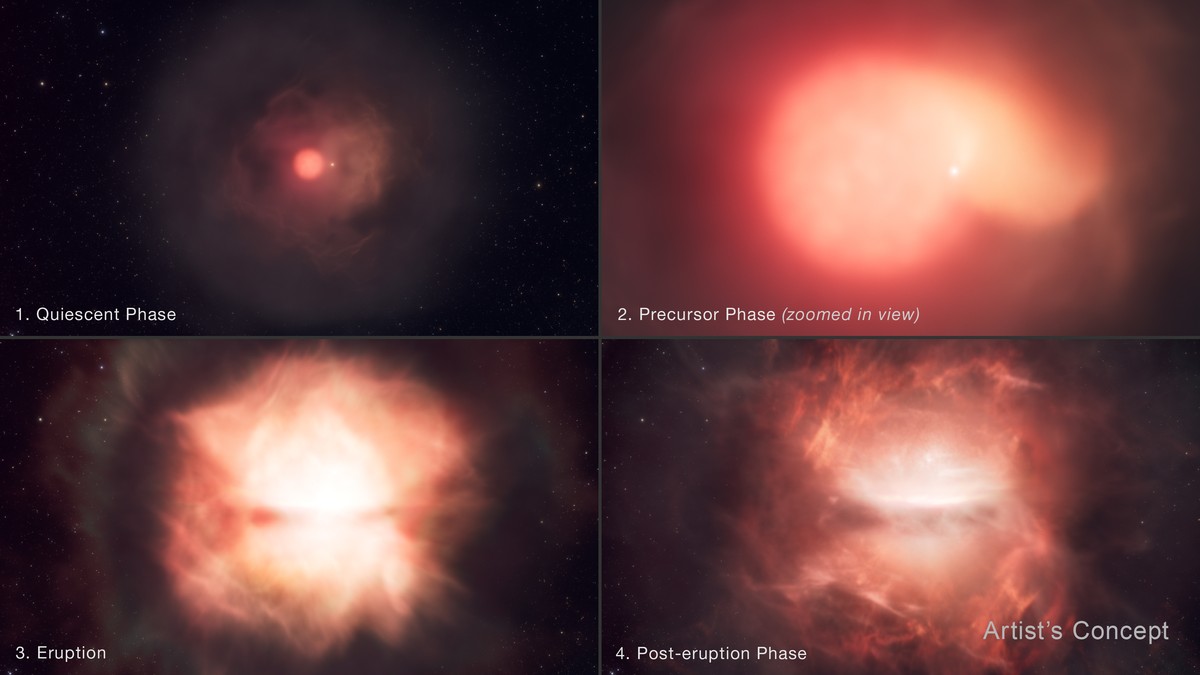
About half of the stars in the sky have at least one partner, and many of those pairs orbit so close together that they cannot both grow old in peace. The trouble starts when the bigger star nears the end of its life. Big stars do not just fade. They puff up, sometimes to hundreds of times their old size, and their outer layers become thin, cool and enormous.
If a companion orbits inside that swelling zone, it ends up flying through the giant’s outer gas. Astronomers call this stage common envelope evolution, because the two stars now share one outer layer. It works a bit like a satellite skimming the top of Earth’s atmosphere. Every lap, the gas pushes back on the smaller star like drag, it loses orbital energy and it sinks closer to the giant’s core.
That lost energy has to go somewhere. Part of it heats the giant’s outer layers and leaks out as light, which is why Big Bao kept slowly brightening for years. Part of it can push gas off into space. “As the companion continues its orbit, it keeps peeling off the primary star’s outer layers, and that gas flows away into the surrounding space,” said co-author Kishalay De of Columbia.
From there, the story can end in two ways. If the companion dumps enough energy to blow the whole shared envelope away, both stars survive as a much tighter pair. If not, the companion spirals all the way down to the core and the two become one star. In Bao’s case, the team estimates that only about a tenth of the giant’s outer gas escaped, and the energy in the eruption points to Little Bao reaching Big Bao’s core. De described the encounter as “almost like a bomb exploding inside a living star.”
The eruption threw out about 0.1 to 0.2 times the mass of the Sun, according to Nature’s summary of the paper. That sounds small for a star, but by our own math it works out to roughly 33,000 to 67,000 times the mass of Earth, thrown off into space.
Just how big was Big Bao?
By the team’s reconstruction, Big Bao was about seven times as massive as the Sun, 18,000 times as bright and roughly 350 times as wide. Little Bao was the smaller one, about 0.7 times the Sun’s mass, a bit fainter and a bit smaller than our own star.
Those numbers are hard to picture, so we drew them. The Sun is about 865,000 miles wide. Multiply its radius by 350 and you get a star whose surface would sit about 151 million miles from its center. If you swapped Big Bao in for the Sun, Mercury, Venus and Earth would all be inside it, and its surface would reach past the average orbit of Mars, which is about 142 million miles from the Sun.
Explore your sky tonightLive sky map for where you are: planets, the ISS and bright stars above your horizon.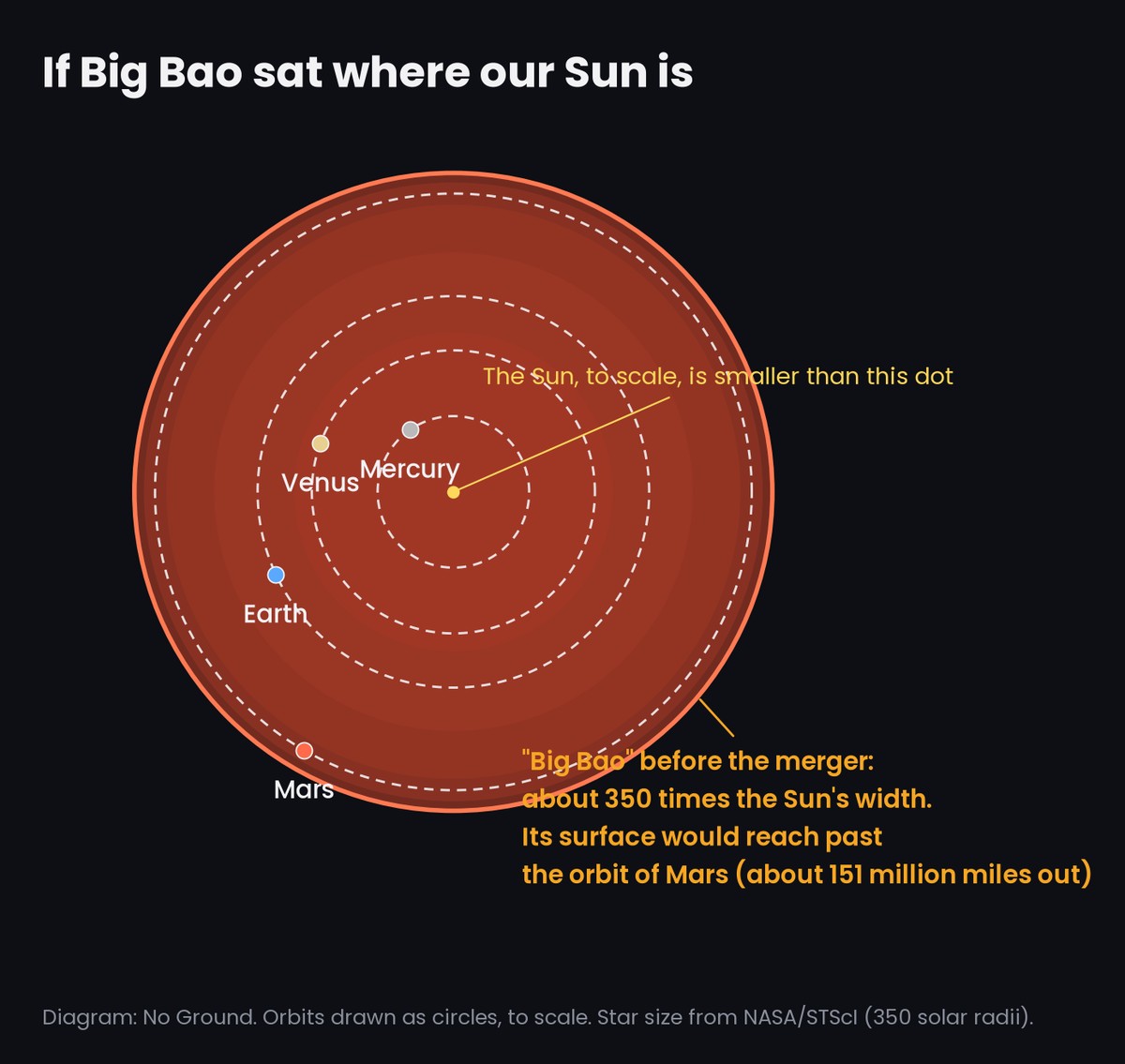
Here is the part that surprised the researchers. Once Little Bao touched the giant, the two merged after only about seven orbits, roughly seven years. NASA says other known mergers, involving two smaller stars, took thousands of orbits. Blagorodnova said the team had expected an outburst from such an enormous, puffy star to unfold over years. Instead, the final flare peaked within a week.
A seven-year countdown, caught by five telescopes
No single telescope tells this story. It took a relay of instruments, several of them NASA missions, each catching a different moment.
NEOWISE saw the early brightening. In September 2024, the Wide-field Infrared Transient Explorer (WINTER) showed the star getting brighter and starting to throw off dust. In July 2025, NASA’s SPHEREx survey telescope happened to catch Bao fading quickly in visible light while brightening in infrared light, a sign that fresh dust was forming and hiding the star. Then came the Zwicky Transient Facility’s eruption detection in October, quick follow-up from NASA’s now-retired Swift observatory and the Gemini North telescope in Hawaii in November, and finally Webb on Dec. 24, 2025.
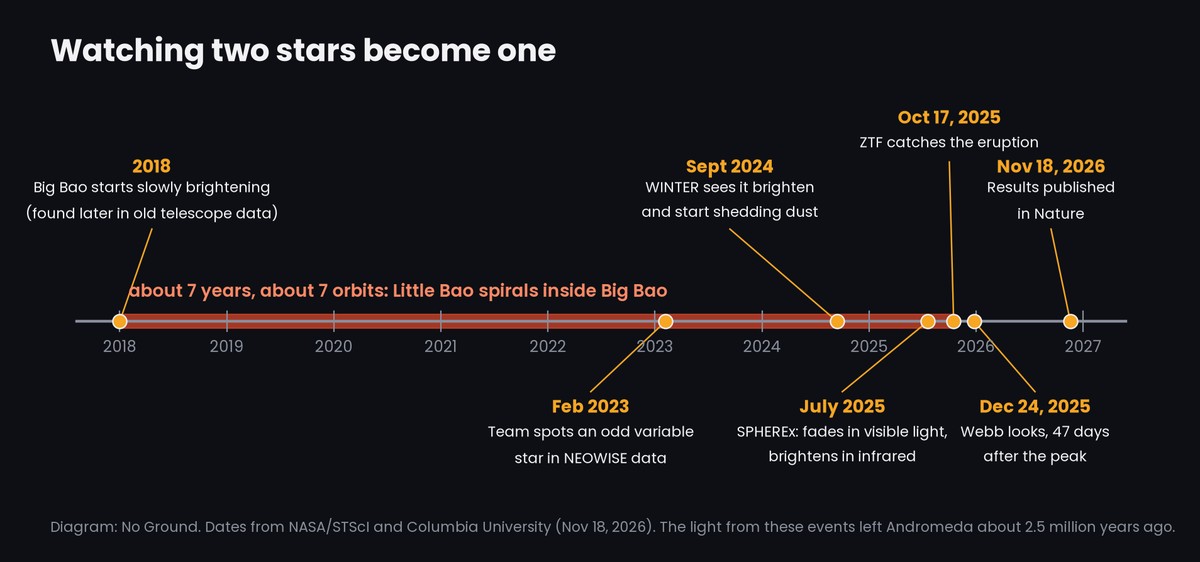
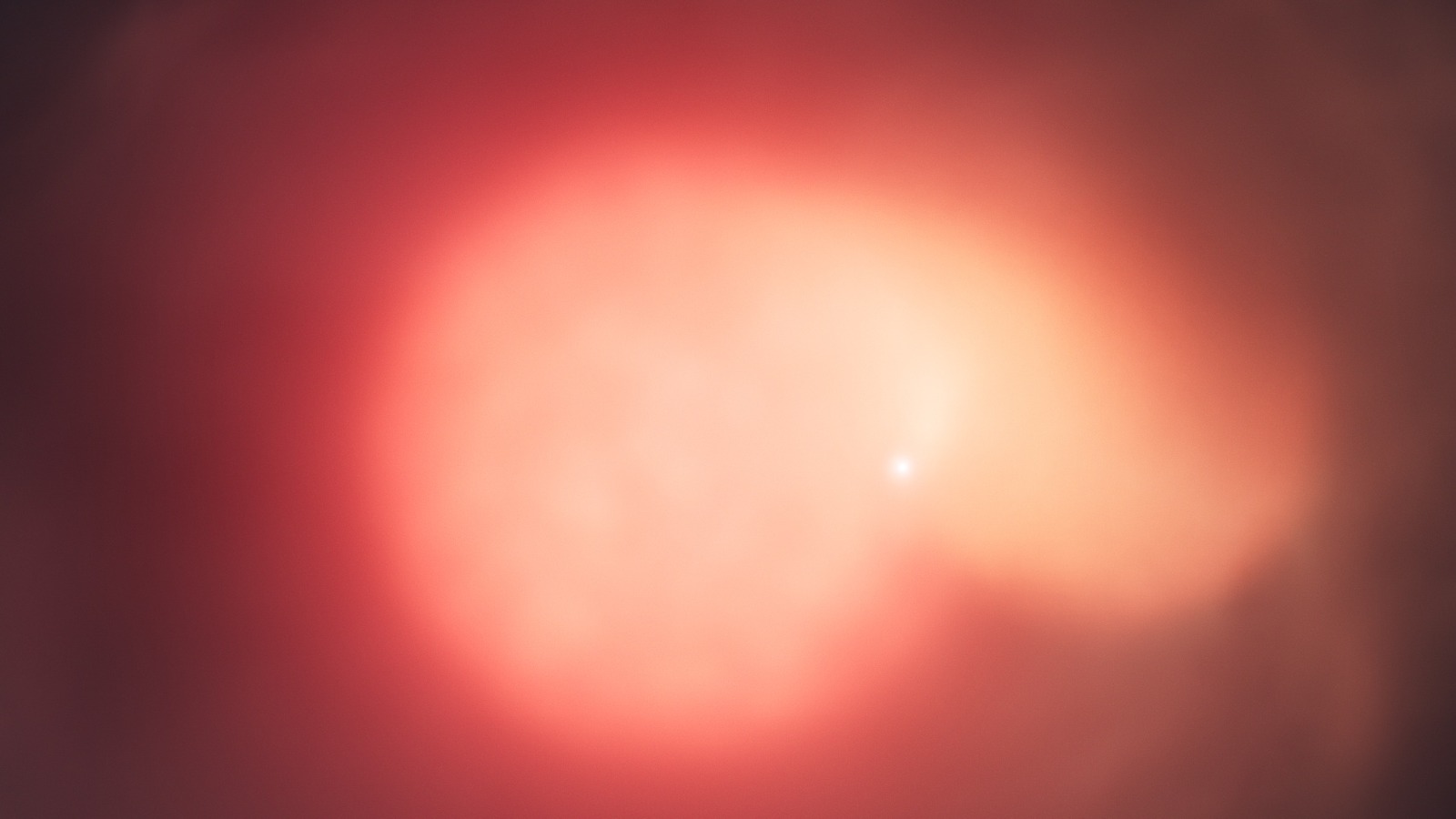
Webb looked just 47 days after the eruption peaked, the earliest follow-up of an event like this, according to Karambelkar. Its mid-infrared view showed the dust Big Bao had shed over centuries, and that let the team test their computer models of the system against reality. “The telescope’s data helped us characterize what the system looked like before, during, and immediately after the merger, which is absolutely mind-blowing,” he said.
One more thing to keep in mind: “watching it happen” is relative. The light we caught in 2025 left Andromeda about 2.5 million years ago. In miles, that distance is roughly 15 million trillion, which is why even this violent event shows up as a single dot.
Why one merger in another galaxy matters
Common envelope evolution is one of the big unsolved steps in how stars live and die. Astronomers think it is how many of the universe’s tightest star pairs are made, including pairs of white dwarfs, neutron stars and black holes that later spiral together and send out ripples in space-time called gravitational waves. Some of those pairs explode as supernovae or become rapidly spinning pulsars. Until now, nobody had actually watched the step that squeezes them together. It had to be modeled on computers, and as Sven Buder of the Australian National University, who was not on the team, told ABC News, a star plowing “through a hot ocean of plasma” is “incredibly hard to model.”
Bao gives modelers a real measurement: how efficiently a sinking star turns its orbital energy into ejected gas. The Nature summary says the results suggest standard models may not capture every way that energy gets redistributed. It also notes that future observations are still needed to confirm conclusively that the two stars merged, because thick dust hides what is left.
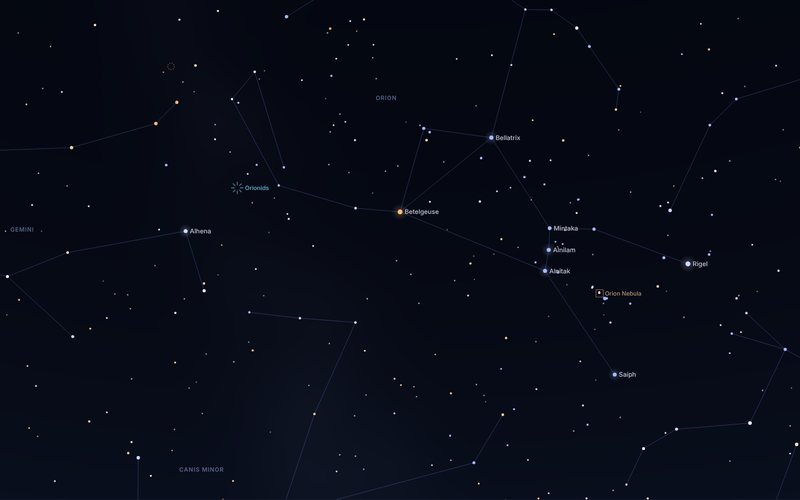
Bao joins a growing list of strange star stories. Radio telescopes have found signs of a small companion star plowing through Betelgeuse’s outer atmosphere, a lighter version of the same kind of close encounter. Another giant star in a distant galaxy keeps flaring like a supernova and surviving, thanks to a compact companion. And some massive stars, rather than putting on a show at the end, may simply vanish into black holes without exploding.
Could this happen to our Sun?
Not like this. The Sun has no partner star to swallow. But it will go through a giant phase of its own. NASA says the Sun is a little less than halfway through its life and will last another 5 billion years or so. When it starts to die, it will swell into a red giant big enough to engulf Mercury and Venus, and possibly Earth.
So in a way, Bao is a preview of the kind of thing giants do to whatever orbits too close. After its red giant phase, the Sun will shrink into a white dwarf. Astronomers have already found a white dwarf that glows green because it swallowed rocky debris, another reminder that dying stars can eat what is around them.
What comes next
Bao is still wrapped in dust, and Science News reports that it may take years or even decades to clear enough to see what the merged star really looks like. The team plans to keep watching.
They also expect company. NASA’s Nancy Grace Roman Space Telescope is about to start huge, repeated surveys of the sky, and the Vera C. Rubin Observatory is scanning the whole southern sky every few nights. Both should catch many more stars that brighten, flicker and erupt. “There’s going to be a large influx of similar discoveries just ahead,” Karambelkar said. The goal now is to spot the next Bao before it erupts, not after.
Bottom line: For the first time, astronomers followed a giant star swallowing its companion from the first slow glow to the final eruption. It took seven years, five telescopes and a lucky look at the right dot in Andromeda, and it gives scientists real numbers for one of the most important, and least understood, steps in the lives of stars.