 No Ground
Updated Oct. 10, 2026, 6:10 p.m. ET: Friday’s forecast storm didn’t materialize. NOAA’s Kp index peaked at 4 on Friday, below storm level. The storm came Saturday instead: NOAA says a CME from Oct. 8 reached Earth around 10:34 a.m. ET, and the planetary index hit Kp 7, a G3 (Strong) storm, at 1:58 p.m. ET, mostly in U.S. daylight. NOAA’s 6:05 p.m. ET forecast called for Kp 5.67 (G2) from 8 to 11 p.m. ET Saturday and Kp 4.67 (G1) from 11 p.m. to 2 a.m. ET. Sunday night then looked active but below storm level (Kp 3.67–4.00), replacing the Sunday-night G2 in NOAA’s morning forecast. Full story: A strong G3 solar storm hit Earth on Oct. 10, mostly in U.S. daylight Earlier updates and the original story follow.
Updated Oct. 9, 2026, 9:30 a.m. ET: Thursday night was quiet. NOAA’s planetary Kp index peaked at 4 (5–8 a.m. ET Friday), just below storm level, so no geomagnetic storm was reached overnight. NASA logged a weak solar-wind shock at Earth at about 6:41 a.m. ET and linked it to the Oct. 6 CME. NOAA’s 8:30 a.m. ET forecast then expected the storm later that day, Friday, Oct. 9: G1 from 8 a.m. to 2 p.m. ET, then G2 from 2 to 8 p.m. ET (Kp up to 6.00). Most of that falls in daylight in the U.S.; the best dark-sky chance is after sunset, roughly 7–8 p.m. ET, at the tail of the G2 window. NOAA also issued a new G2 watch for Saturday night, Oct. 10: Kp 5.67 from 11 p.m. Saturday to 2 a.m. Sunday ET, as more CMEs were due. More on that: The Sun fired an M6.7 flare on Oct. 8. The original story, written Thursday, follows.
Something left the Sun on Tuesday, Oct. 6, and it was due here on the night of Thursday, Oct. 8.
NOAA’s Space Weather Prediction Center expected a coronal mass ejection to reach Earth late on Thursday, Oct. 8, or early Friday, Oct. 9. A CME is a huge cloud of magnetized solar material, and this one left the Sun on October 6. Forecasters said G1 to G2 (Minor to Moderate) geomagnetic storms were likely on October 9. In plain terms, the northern lights could reach farther south than usual, and parts of the northern United States might get a real chance to see them.
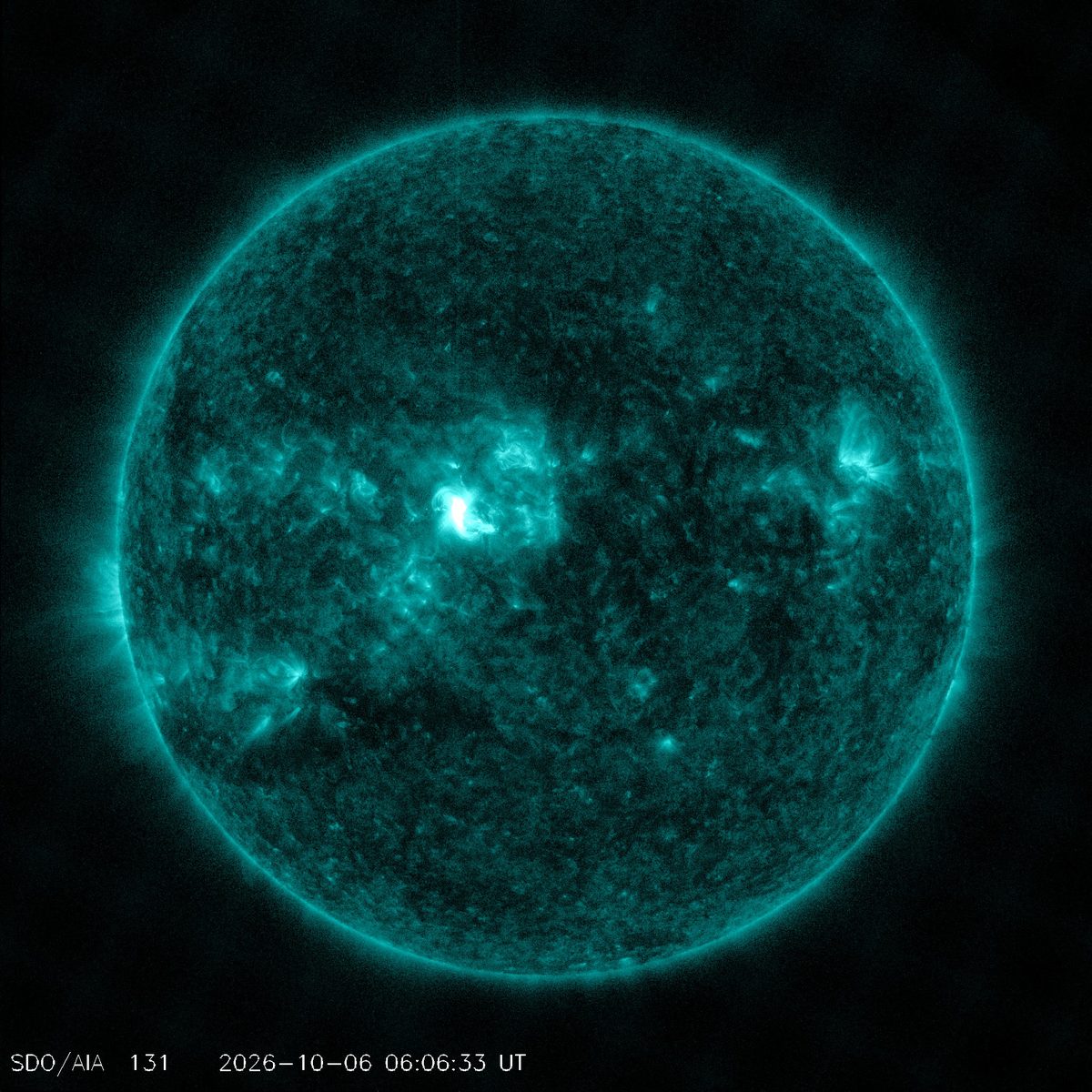
It might happen and it might not. This was the honest version on Thursday, Oct. 8: what NOAA was actually forecasting, what it meant for your sky, and what could still change.
What NOAA forecast on Oct. 8
NOAA’s three-day forecast went out at 8:30 a.m. ET Thursday (12:30 UTC). Its rationale was simple: G1–G2 storms were likely on Oct. 9 “due to the anticipated arrival of a CME from 06 Oct.” The highest expected Kp, the 0-to-9 index forecasters use to measure geomagnetic activity, was 5.67. That counts as G2. NOAA updated its Kp forecast at 6:05 p.m. ET (22:05 UTC). The top value was still 5.67 (G2), but the peak moved earlier, to 2–5 a.m. ET Friday.
Here are NOAA’s three-hour blocks from the 6:05 p.m. ET update, converted to Eastern Time:
- Thursday evening, before 11 p.m. ET: quiet. Kp was forecast to stay below 2.
- 11 p.m. to 2 a.m. ET: Kp 5.00, which is G1. This was the first window.
- 2 a.m. to 5 a.m. ET Friday: Kp 5.67, which is G2. This was the forecast peak.
- 5 a.m. to 8 a.m. ET Friday: Kp 5.00, which is G1.
- Friday evening, 5 p.m. to 11 p.m. ET: Kp 3.33, then 4.00. Unsettled to active, but below storm level.
On the East Coast, the forecast G2 peak fell in full darkness. The last G1 block ran into morning twilight, so only its darker early part was useful. Farther west, those same blocks fell at 8–11 p.m. PT (G1), 11 p.m.–2 a.m. PT (G2) and 2–5 a.m. PT (G1), all in full darkness.
What G1 and G2 actually mean
NOAA rates geomagnetic storms from G1 to G5. G1 and G2 are the bottom two steps. They're common, and they're not dangerous to people on the ground.
Explore your sky tonightLive sky map for where you are: planets, the ISS and bright stars above your horizon.NOAA’s scale says that at G1, aurora is “commonly visible at high latitudes (northern Michigan and Maine).” At G2, aurora “has been seen as low as New York and Idaho.” The G2 watch NOAA issued for this storm put it like this: “Aurora may be seen as low as New York to Wisconsin to Washington state.”
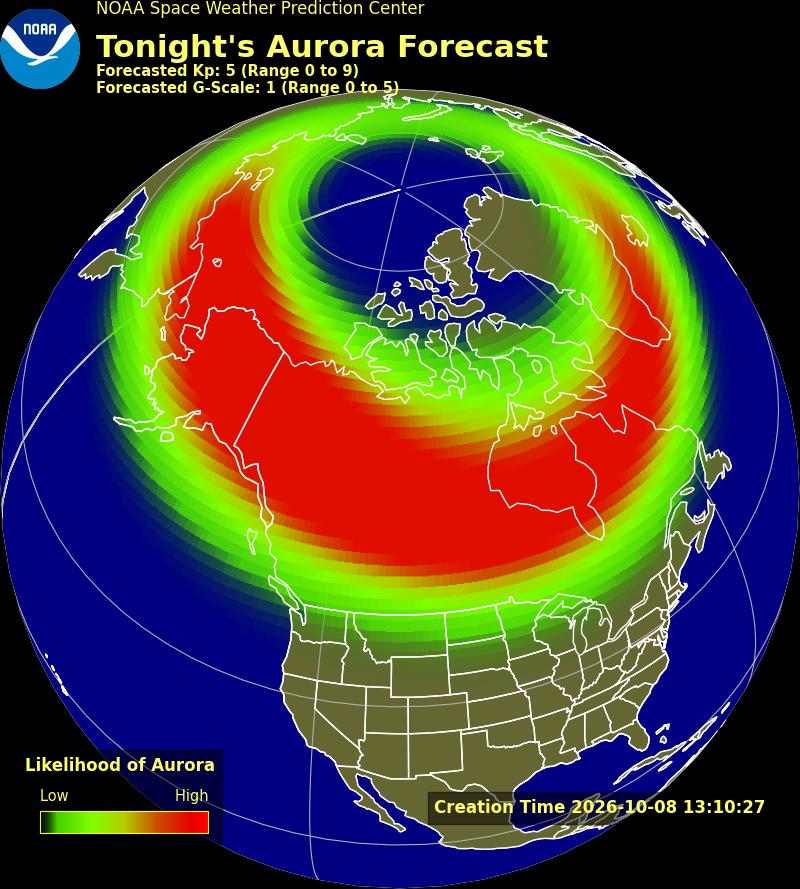
Read those lines as the outer limit on a good night, not a promise for every backyard. The same watch lists effects for operators, mostly at high latitudes. Power grids may see fluctuations. Satellites may feel extra drag in low Earth orbit. High-frequency radio may fade.
Why the sky lights up at all
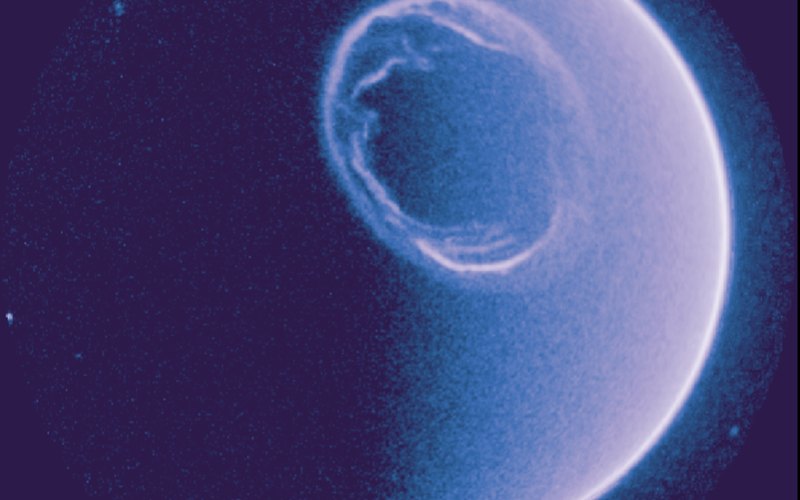
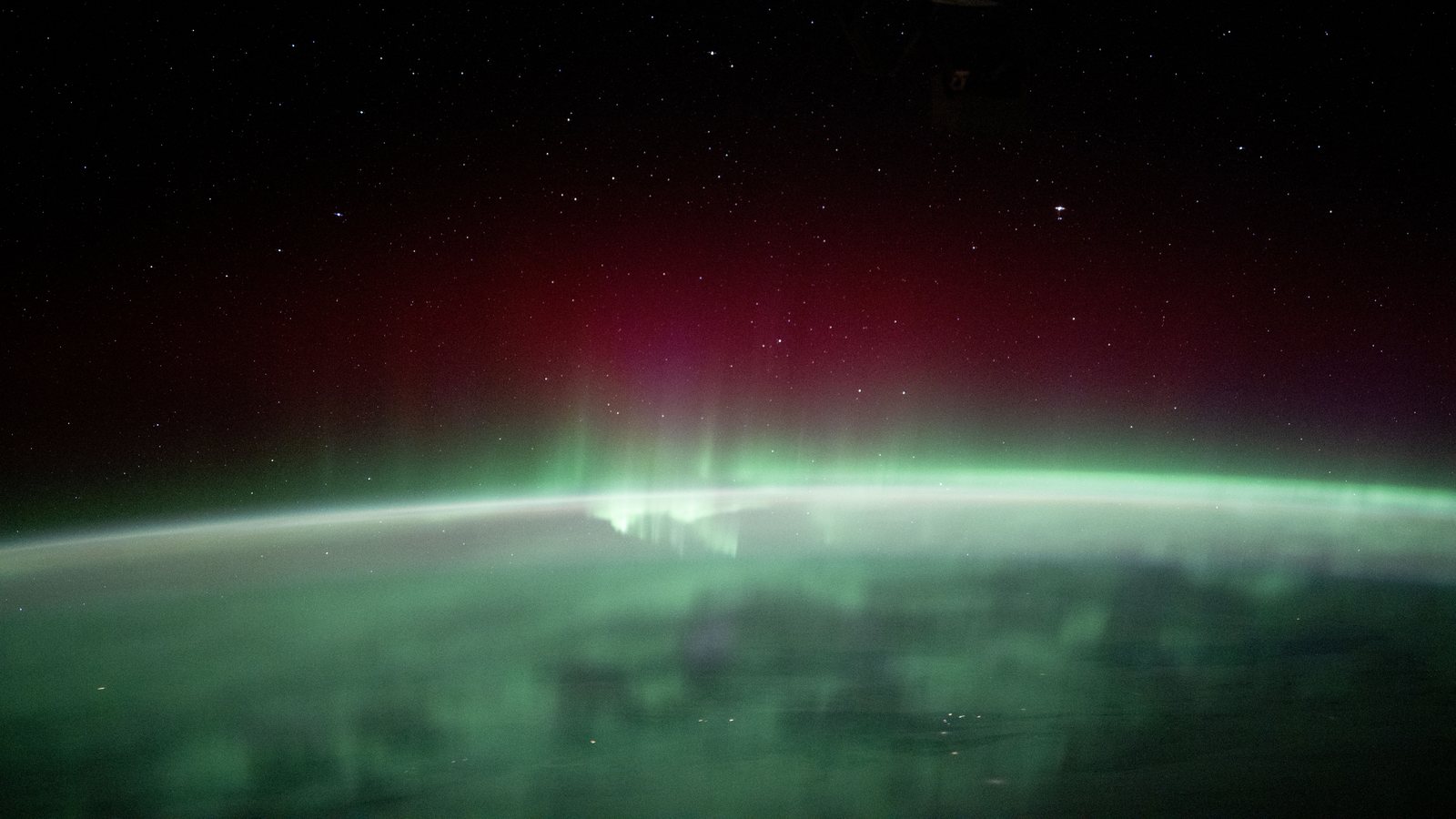
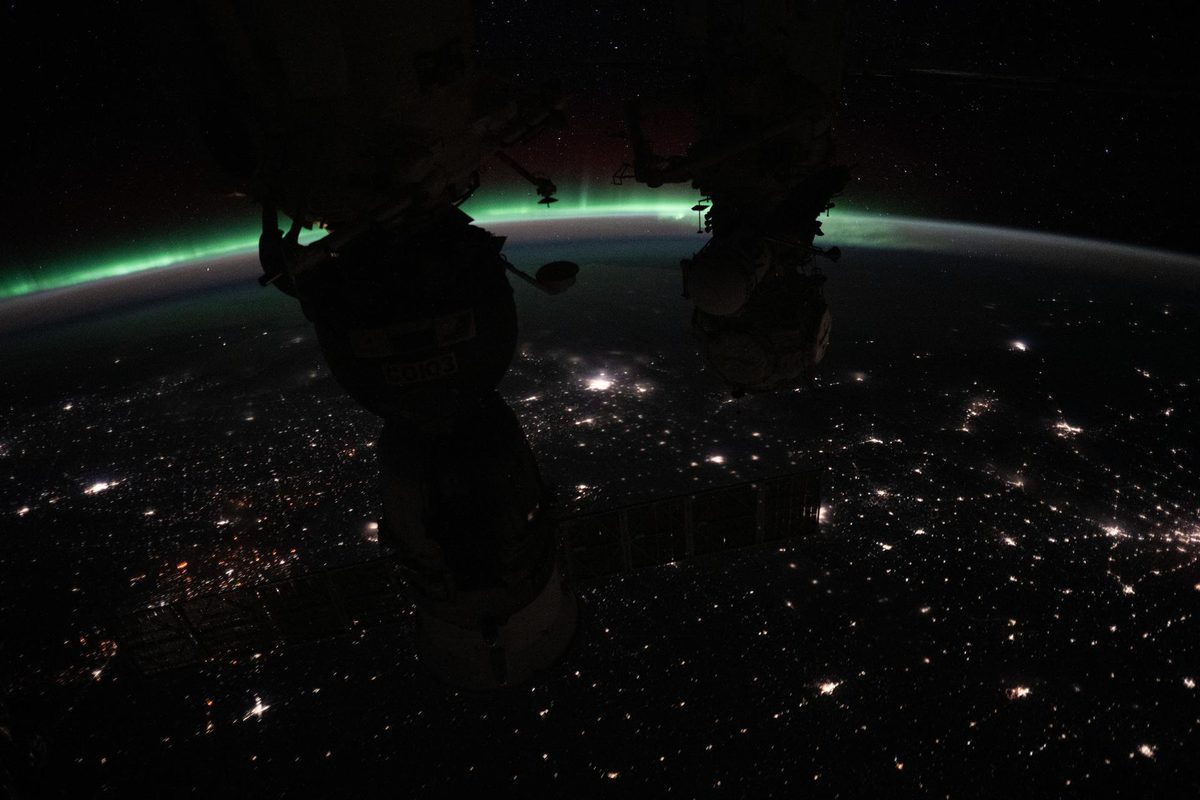
Aurora is what happens when energized electrons, steered by Earth’s magnetic field, slam into oxygen and nitrogen high in the atmosphere. NOAA says it typically forms 80 to 500 kilometers up. A CME shakes the magnetic field around Earth. During a storm, the glowing rings around the poles grow outward, toward places that usually never see them.
How to give yourself the best chance
- Get dark. Get away from city lights. NOAA notes that moonlight also dims how bright the aurora looks.
- Look north. Find a spot with a low, clear northern horizon. NOAA says that from a good vantage point, such as a hilltop facing north, you can see aurora even when it's up to about 1,000 km (600 miles) farther north.
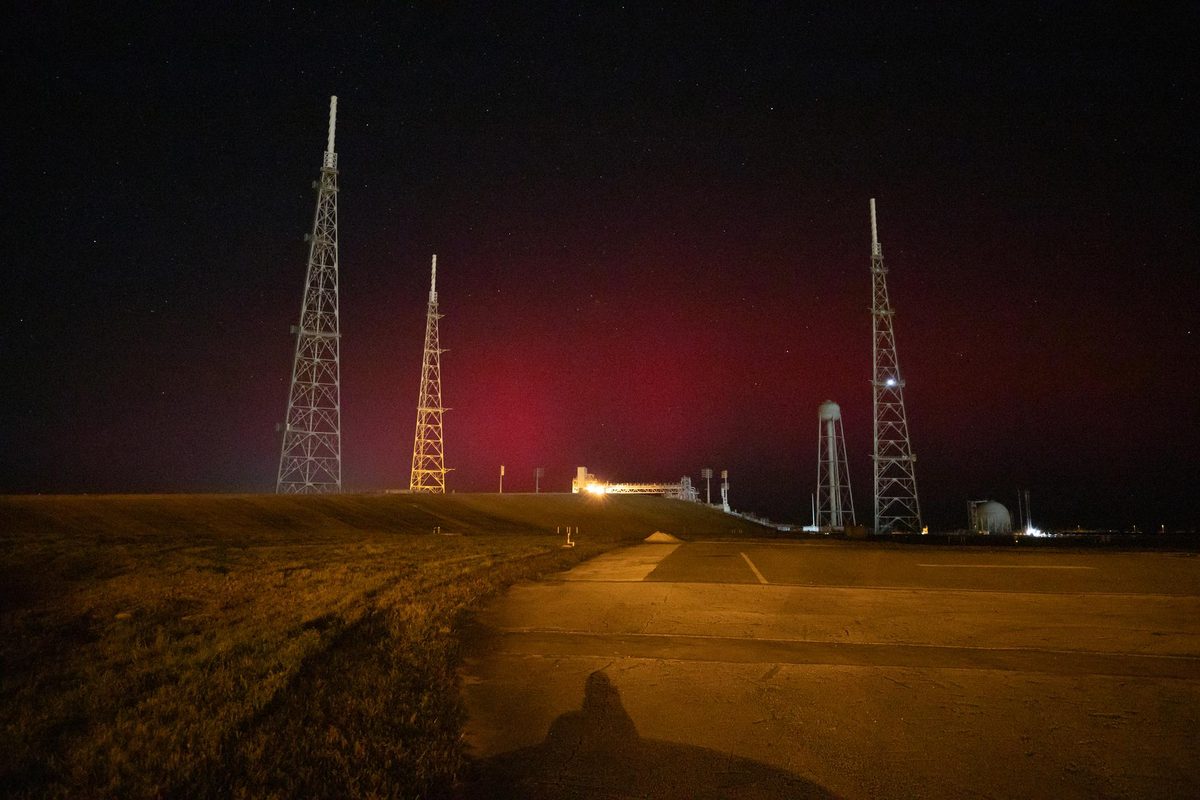
- Use your phone. Night mode and longer exposures often pick up color that looks pale or gray to the eye. If you see a faint glow to the north, take a photo.
- Check before you go. NOAA’s Aurora Dashboard and 30-minute aurora forecast show what's happening right now. Check your local cloud forecast too, because clouds beat everything.
What could still change (as of Oct. 8)
CMEs don't run on a train schedule. Arrival times can shift by hours, which can push the best window earlier or later. Strength matters even more, and it depends on the cloud’s magnetic orientation. Forecasters can't measure that until the CME passes monitoring spacecraft sunward of Earth, usually less than an hour before it hits. A storm forecast as G2 can come in weaker or stronger than predicted.
NOAA expected things to stay unsettled to active into and through Oct. 10, as a fast stream of solar wind from a coronal hole took over.
Something else to watch (preliminary): NOAA’s Thursday forecast discussion also noted a C7.9 flare from sunspot Region 4549 on Oct. 7. A CME followed it. Early modeling showed part of that cloud heading for Earth, with arrival early on Oct. 11 (UTC). NOAA hadn't forecast a storm level for it yet, so it was a possibility, not a forecast.
Update, Oct. 8 evening: NOAA’s 6:05 p.m. ET forecast then showed possible G1 levels late Saturday night into Sunday, and Thursday’s M6.7 flare launched another CME. Read more: The Sun fired an M6.7 flare on Oct. 8. The weekend storm arrived early, on Saturday.
So the night of Oct. 8 was a maybe, but a good one. Clear skies, a dark spot, a view to the north, and a little patience were all you needed. If the Sun cooperated, the light it sent on Tuesday would be glowing over the northern horizon by Friday morning.
No Ground. Stay curious.