 No Ground
Updated Oct. 10, 2026, 6:10 p.m. ET: The weekend storm arrived early. NOAA says a CME from Oct. 8 reached Earth around 10:34 a.m. ET Saturday and drove a G3 (Strong) storm, Kp 7, from 1:58 p.m. ET. NOAA’s post doesn’t say which Oct. 8 cloud it was, and NASA’s DONKI database links the shock to CMEs from Oct. 6 and 7. NOAA’s 6:05 p.m. ET forecast called for G2 from 8 to 11 p.m. ET Saturday and G1 from 11 p.m. to 2 a.m. ET; Sunday night then looked below storm level. Region 4549 also fired an M6.4 flare at 11:10 a.m. ET Saturday with a halo CME; when or whether it would arrive was still preliminary, and NOAA hadn’t issued a forecast for it. Full story: A strong G3 solar storm hit Earth on Oct. 10, mostly in U.S. daylight Earlier updates and the original story follow.
Updated Oct. 9, 2026, 9:30 a.m. ET: NOAA’s 8:30 a.m. ET forecast discussion says analysis of this CME indicates speeds near 900 km/s, and modeling suggests it is likely to arrive at Earth on Oct. 11. NOAA has issued a G2 (Moderate) watch for Oct. 11 (UTC). Its forecast called for Kp 4.67 (G1) from 8 to 11 p.m. ET Saturday and Kp 5.67 (G2) from 11 p.m. Saturday to 2 a.m. Sunday ET, citing the arrivals of several CMEs. Thursday night stayed quiet (Kp peaked at 4); NOAA then expected G1–G2 from the Oct. 6 CME later on Friday, Oct. 9. The original story, written Thursday evening, follows.
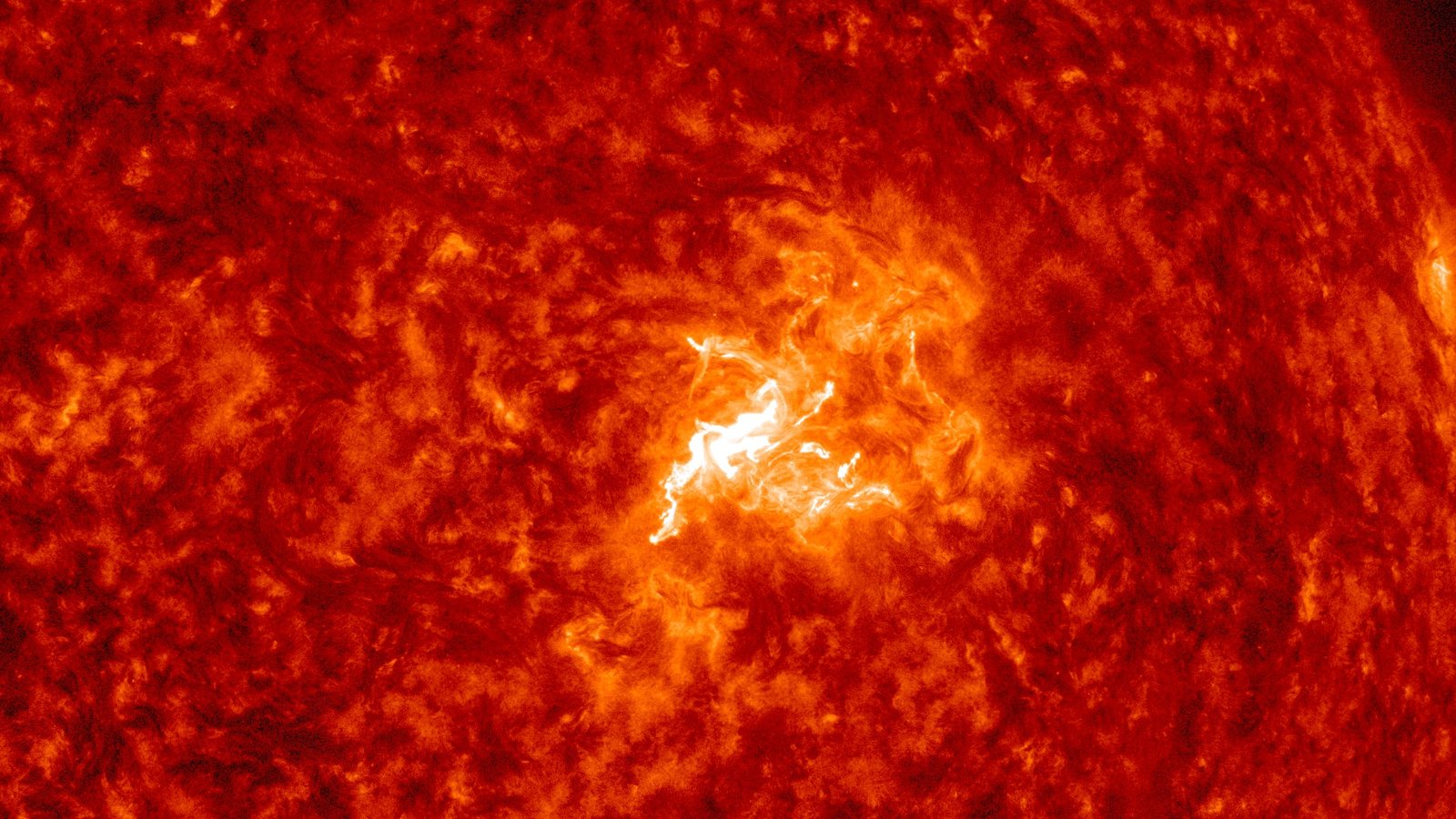
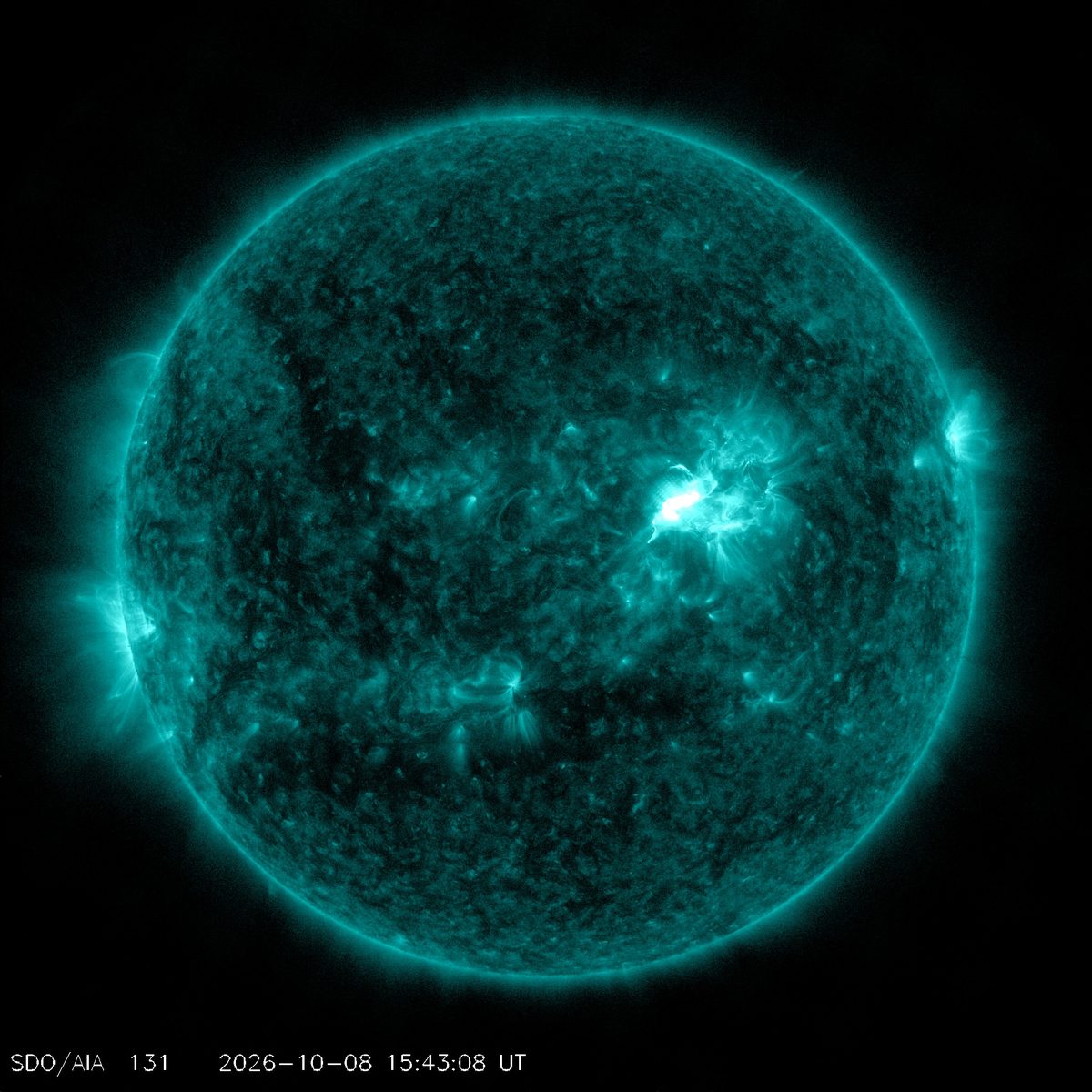
Just before noon Eastern on Thursday, a tangled knot of sunspots near the middle of the Sun flashed brighter than anything it had produced all week.
The flare peaked at 11:48 a.m. ET on October 8. NOAA’s Space Weather Prediction Center classed it as an M6.7, a strong flare in the M class, which sits one step below the most powerful X-class flares. It came from sunspot Region 4549, the same group that launched the cloud expected to brush Earth on the night of Oct. 8. NASA analysts said this flare launched a cloud of its own.
What happened at 11:48
The flare began at 11:29 a.m. ET and was over by 11:58 a.m. ET. NOAA logged it at N12W20, a spot close to the center of the Sun’s Earth-facing side. Its burst of X-rays caused an R2 (Moderate) radio blackout: a limited loss of high-frequency radio on the sunlit side of Earth for tens of minutes. That part was over within the hour. X-rays travel at the speed of light, so they arrive in about eight minutes and fade when the flare fades.
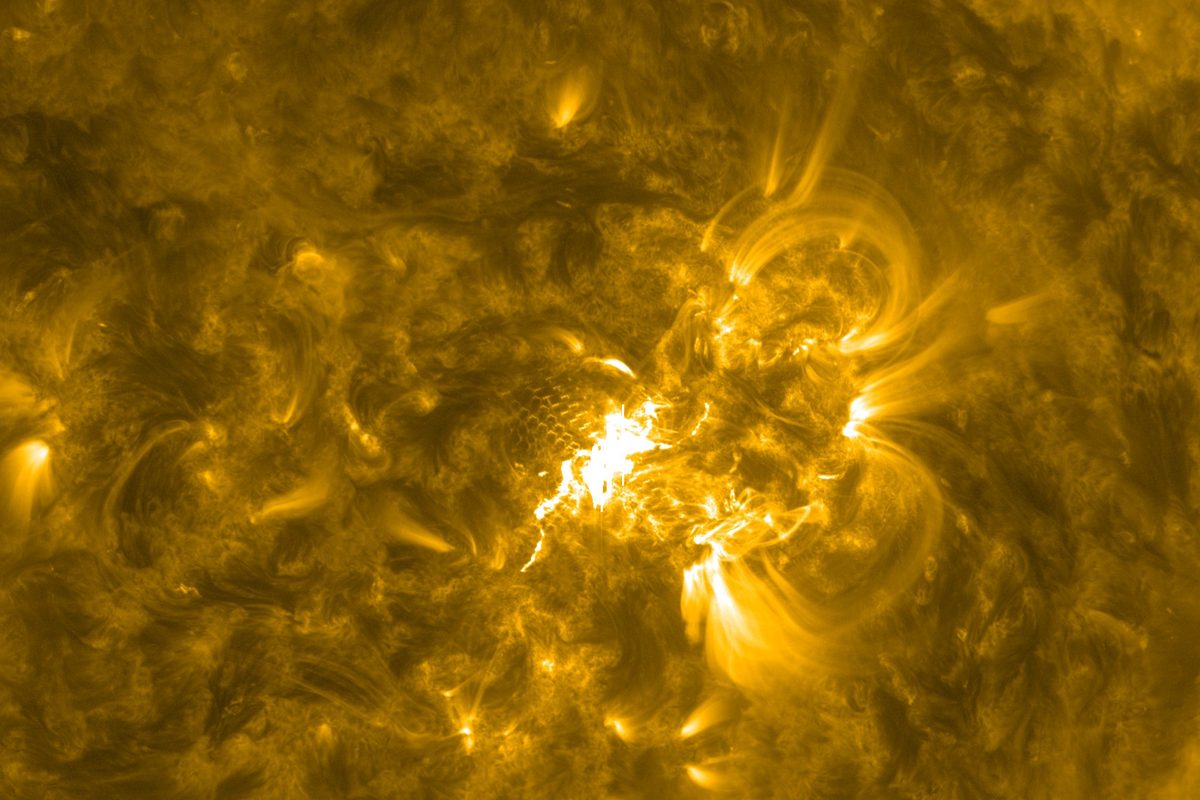
NOAA describes Region 4549 as a beta-gamma-delta sunspot group. In plain terms, its opposite magnetic polarities are packed tightly together, which is the kind of setup forecasters watch for bigger flares. In its 6 p.m. ET report Thursday, NOAA raised the odds of more M-class flares to 55% per day through Oct. 11, with a 10% daily chance of an X-class flare.
Did it send a cloud toward Earth?
A flare and a coronal mass ejection (CME) are different things. The flare is the flash of light. A CME is a cloud of magnetized solar material that can weigh billions of tons, and it can take days to cross the 93 million miles to Earth. Only a CME can trigger a geomagnetic storm and push the northern lights south.
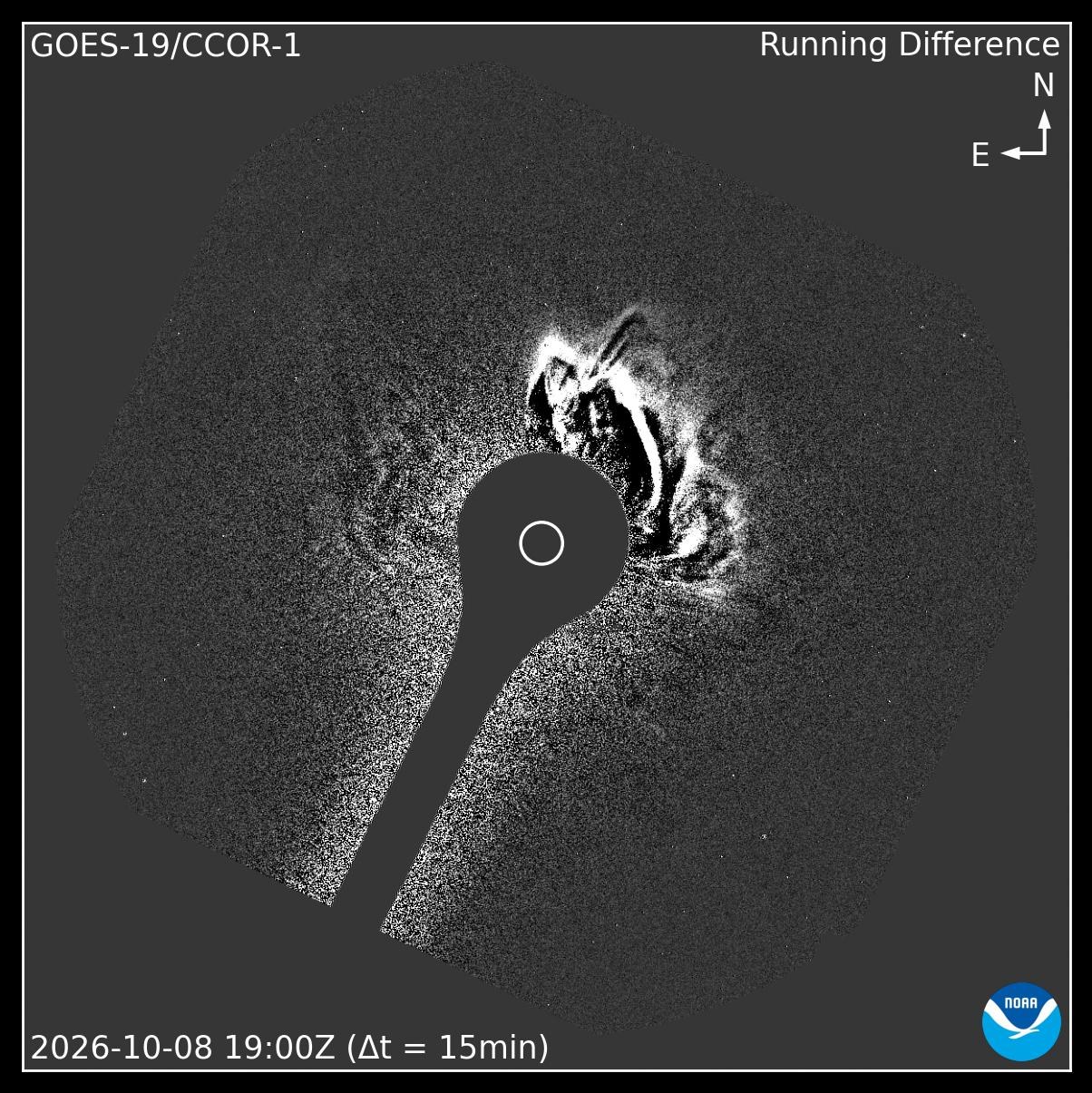
This time there was one. NASA’s space weather database, DONKI, links a CME to the M6.7 flare. It was first spotted at 12:53 p.m. ET by the STEREO-A spacecraft’s coronagraph, and to the northwest in NOAA’s GOES-19 coronagraph. NASA analysts also noted a wave of disturbance that rippled across the whole northwest quarter of the Sun’s Earth-facing disk.
When could it arrive?
NASA’s models (preliminary): NASA ran its WSA-Enlil solar wind model several times Thursday afternoon as analysts refined the cloud’s speed. An early run, using a preliminary speed of about 723 km/s (roughly 1.6 million mph), put the arrival near 5 a.m. ET Sunday, Oct. 11. A slower updated measurement, about 504 km/s, pushed it later. The newest run, finished at 6:21 p.m. ET and including both of Thursday’s CMEs, put the arrival around 4:15 p.m. ET Sunday, with an estimated Kp of 3 to 5. On NOAA’s scale, Kp 5 is a G1 (Minor) storm.
NOAA’s forecast: NOAA’s geomagnetic forecast, issued at 6:05 p.m. ET Thursday, called for Kp 5 (G1, Minor) from 11 p.m. Saturday to 2 a.m. Sunday ET, with active levels on either side. A joint NOAA/U.S. Air Force report issued at 6 p.m. ET expected “quiet to minor storm levels” on Oct. 11. NOAA hadn’t issued a storm watch for the weekend. Its products didn’t yet say which cloud was behind the Saturday-night forecast. NOAA’s Thursday-morning discussion, written before the M6.7 flare, tied an early Oct. 11 (UTC) arrival to Wednesday’s CME. NOAA’s next forecast discussion was expected around 8:30 p.m. ET Thursday.
Update, Oct. 9: NOAA then issued a G2 (Moderate) watch for Oct. 11 (UTC). Its 8:30 a.m. ET Friday forecast called for Kp 4.67 (G1) from 8 to 11 p.m. ET Saturday and Kp 5.67 (G2) from 11 p.m. Saturday to 2 a.m. Sunday ET. NOAA’s discussion put this CME’s speed near 900 km/s and said modeling suggested it was likely to arrive on Oct. 11. NOAA expected additional enhancements on Oct. 11 from CMEs that left the Sun on Oct. 7–8.
So the two agencies didn’t line up perfectly. NOAA’s forecast pointed to Saturday night, Oct. 10. NASA’s newest run for Thursday’s clouds pointed to Sunday afternoon, Oct. 11.
Explore your sky tonightLive sky map for where you are: planets, the ISS and bright stars above your horizon.Those are computer models, and they come with hours of uncertainty either way. How strong a storm gets depends most on the cloud’s magnetic orientation. Nobody can measure that until the CME passes the monitoring spacecraft about a million miles upstream, roughly 15 to 60 minutes before it hits Earth.
A crowded weekend for space weather, Oct. 10–11
The Oct. 8 CME wasn’t the only one heading this way. Region 4549 had been busy all week.
Thursday night, Oct. 8, the Oct. 6 CME: This was the one NOAA’s G2 watch was for. As of 6:35 p.m. ET it hadn’t arrived. NOAA’s real-time solar wind data still showed calm conditions, around 350 km/s.
Wednesday, the Oct. 7 CME: It followed a C7.9 flare from the same region. NOAA said Thursday morning that part of it should reach Earth early on Oct. 11 (UTC), which was Saturday evening or night in the eastern U.S. NASA’s model had it as a glancing blow around 2 a.m. ET Sunday.
Thursday, two more: Besides the M6.7 cloud, NASA logged a separate CME from a filament eruption near the middle of the Sun’s Earth-facing side. It was first seen at 12:24 p.m. ET, moving about 579 km/s. NASA’s newest model run includes both of Thursday’s CMEs together.
What it could mean for the northern lights
As of Thursday, Oct. 8, the solid forecast was for that night. NOAA’s G2 (Moderate) watch for Oct. 9 still stood for the CME that left on Oct. 6. Our northern lights guide for Oct. 8 has the viewing windows and tips.
Update, Oct. 9: Thursday night stayed quiet; NOAA’s Kp index peaked at 4, below storm level. NOAA’s 8:30 a.m. ET forecast then expected G1 from 8 a.m. to 2 p.m. ET Friday and G2 from 2 to 8 p.m. ET, mostly in daylight.
Thursday evening, Oct. 8: NOAA’s 6:05 p.m. ET update moved that night’s strongest window a bit earlier. It then forecast Kp 5 (G1) from 11 p.m. to 2 a.m. ET, a possible G2 peak (Kp 5.67) from 2 to 5 a.m. ET Friday, and Kp 5 again from 5 to 8 a.m. Timing could still shift by hours.
As of Thursday, Sunday, Oct. 11, was a maybe on top of a maybe. If NASA’s model runs held and the magnetic fields lined up, the weekend could bring another chance at aurora, most likely in the far northern U.S. If they didn’t, it could pass with little more than unsettled conditions.
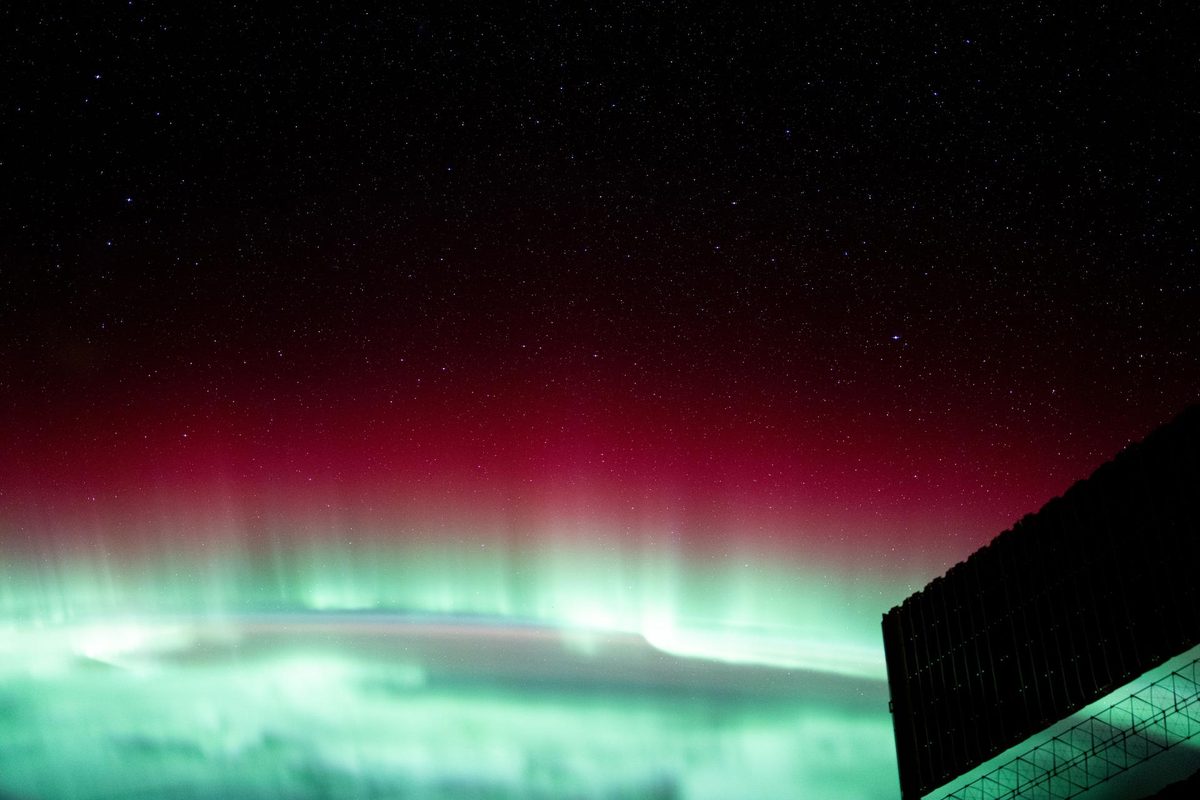
The Sun’s light from that flare reached us in eight minutes. The cloud behind it would take days. That gap is the waiting game of space weather, and on the weekend of Oct. 10–11 the waiting could pay off.
No Ground. Stay curious.