 No Ground
Say hello to Voyager 1 today, and it will not hear you until tomorrow.
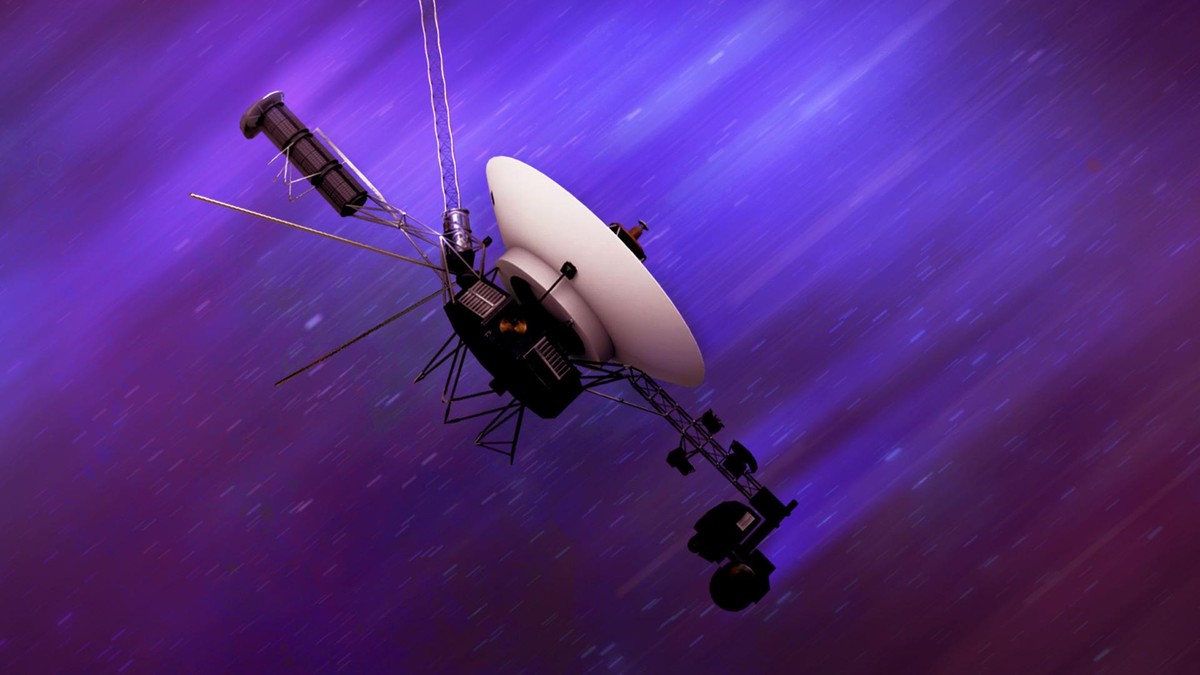
At 5:16:07 a.m. EST on Wednesday, Nov. 18, 2026, NASA’s Voyager 1 reached a distance of one light-day from Earth, a milestone NASA confirmed on Nov. 19. That is how far light travels in 24 hours: 16,094,799,096 miles (25,902,068,356 kilometers). No human-made object has ever been that far from home.
Nothing happened out there when it crossed that line. NASA says the spacecraft will not detect any change around it, and nothing changes on board. The milestone is about distance, and about what that distance now does to every conversation with it.
Two days for a hello
Radio waves travel at the speed of light. So a command sent from NASA’s Deep Space Network now needs 24 hours to reach Voyager 1, and the spacecraft’s reply needs another 24 hours to come back.
“If you want to say ‘hello’ to Voyager, you send your message and then you go home and you wait two days before you finally get a response,” said Suzanne Dodd, Voyager project manager at NASA’s Jet Propulsion Laboratory (JPL) in Southern California.
For scale, NASA notes that light crosses the gap to the Moon in about 1.3 seconds, and from the Sun to Earth in about 8 minutes and 20 seconds. To reach Voyager 1, it now needs a whole day.
How far is one light-day, really?
Light moves at about 186,000 miles every second. Multiply that by the 86,400 seconds in a day and you get NASA’s number: just over 16 billion miles. Numbers that big stop meaning anything, so here is a way to feel it. If you could drive that distance on a highway at 65 mph without ever stopping, the trip would take about 28,000 years.
The chart below lines up a few of the light-trips that matter in space. Each one is a one-way trip. The Moon is a heartbeat away. Mars, depending on where it and Earth are in their orbits, is 3 to 22 minutes away, which is why rovers there drive themselves between commands. Neptune, the farthest planet, is a little over 4 hours away. Voyager 1 is now a full day away. The nearest star after the Sun, Proxima Centauri, is more than four years away.
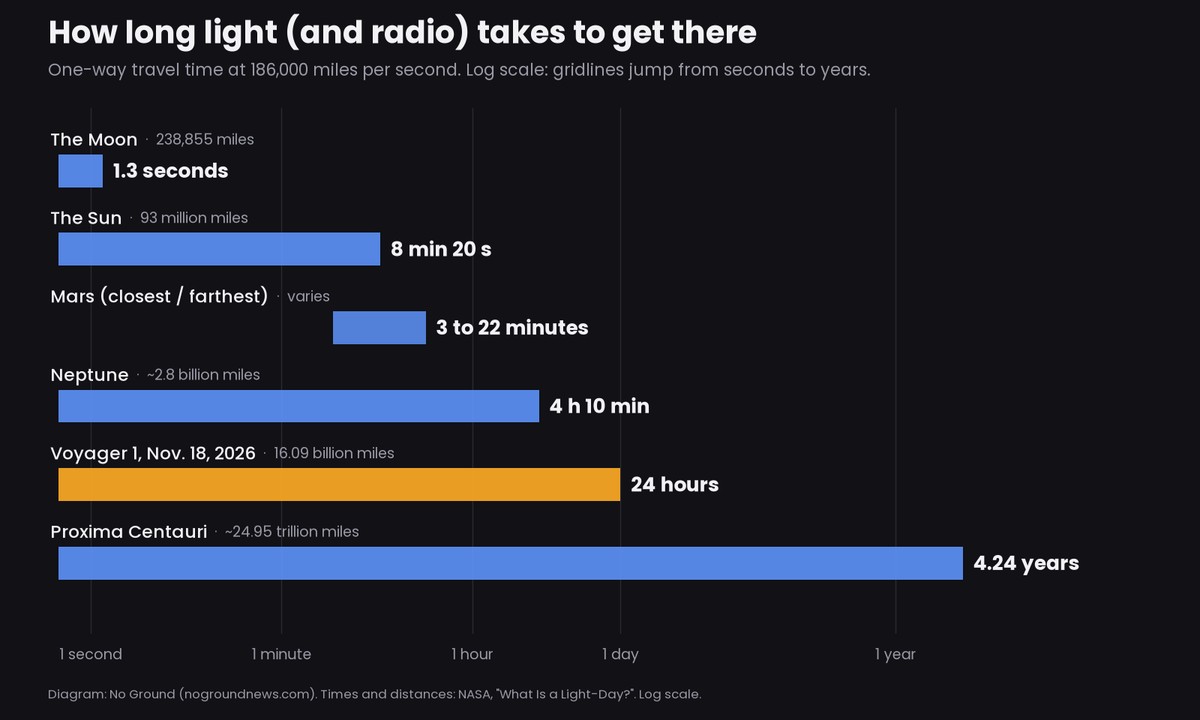
That last bar is the humbling one. A light-year is about 5.88 trillion miles, roughly 365 light-days. Voyager 1 needed 49 years, two months and 11 days to cover its first light-day. At its current speed it would need about 17,600 years to cover a single light-year, and roughly 75,000 years to cover the distance to Proxima Centauri, a star it is not even headed toward.
Forty-nine years of falling outward
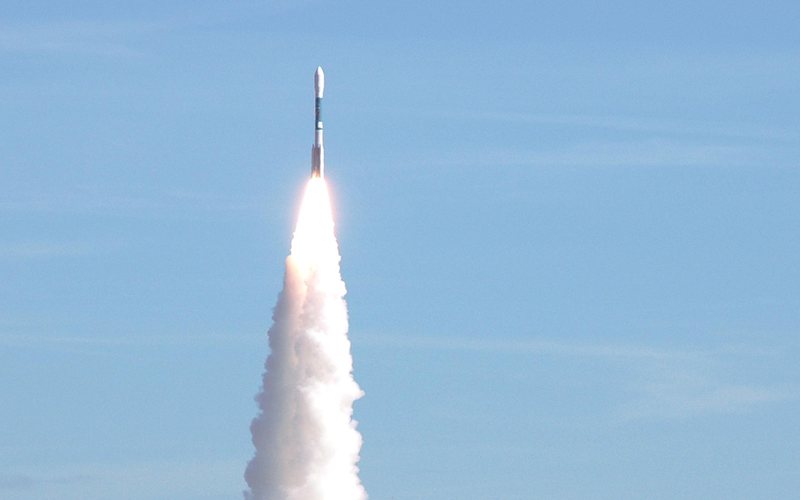
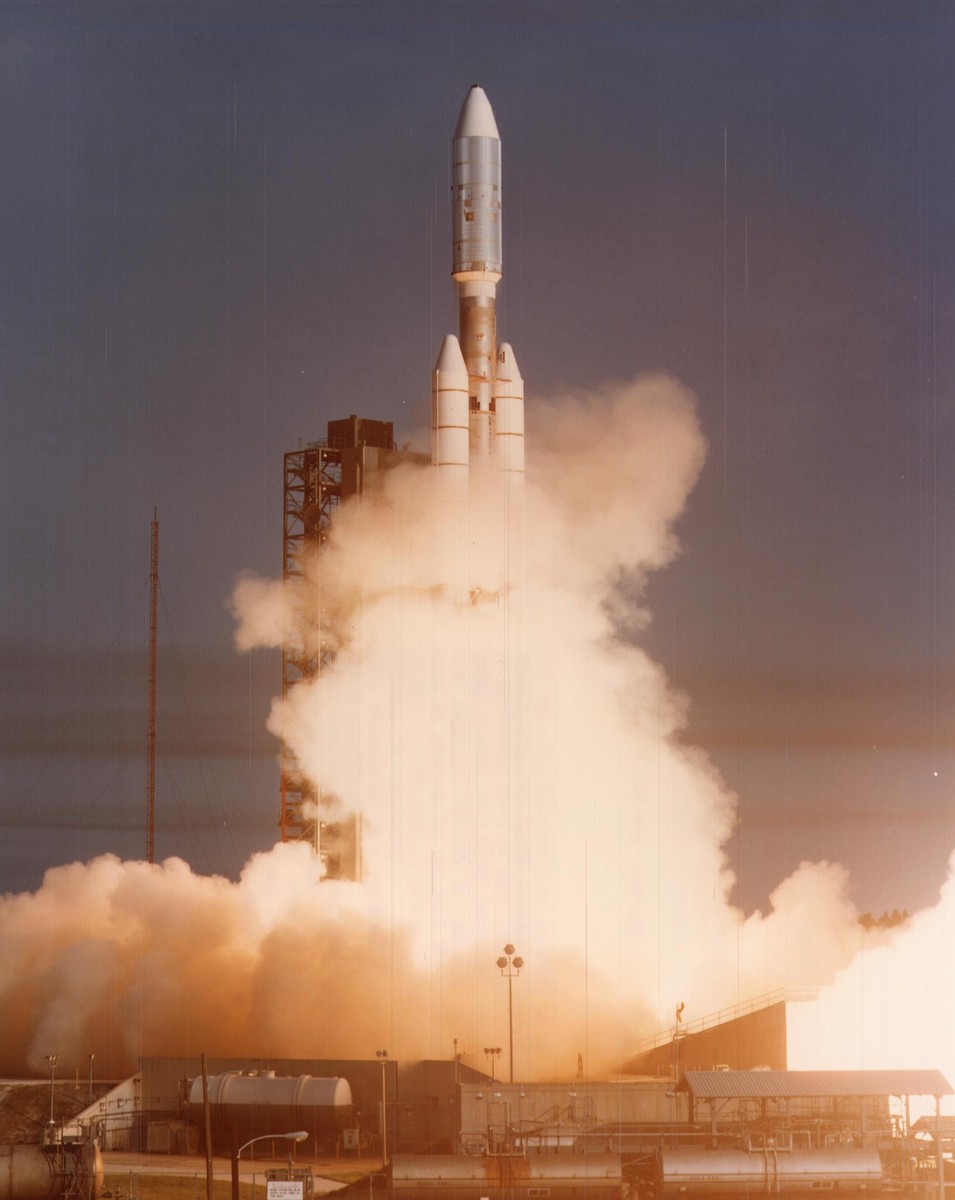
Voyager 1 launched from Florida on Sept. 5, 1977, about two weeks after its twin, Voyager 2. It flew past Jupiter in March 1979 and Saturn in November 1980, then turned away from the planets for good. In August 2012 it became the first spacecraft to enter interstellar space, the region outside the heliosphere, the bubble of particles and magnetic fields created by the Sun.
It is still moving at nearly 38,000 mph (about 61,000 km/h). NASA calls that “a relative crawl” next to light, and the math agrees: light is roughly 17,600 times faster. Voyager 1 is headed in the direction of a faint star called AC +79 3888, also known as Gliese 445, more than 17 light-years from Earth. It is expected to pass within about 1.7 light-years of that star in 40,000 years.
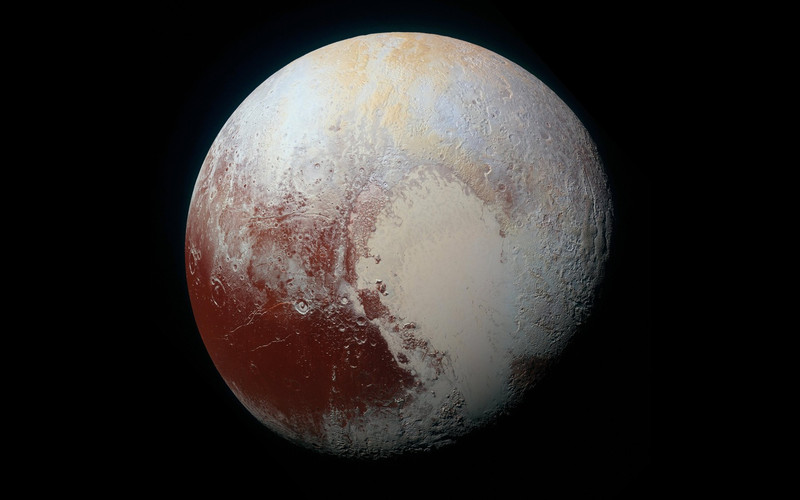
For a sense of how far that is in our own neighborhood: Pluto, which takes about 248 Earth years to circle the Sun once (it still hasn’t finished a single lap since it was discovered), never gets much more than about 4.6 billion miles from the Sun. Voyager 1 is now more than three times farther out than that.
What a one-day delay does to the people flying it
A two-day round trip changes how a mission is run. Nobody at JPL can steer Voyager 1 in real time or watch a command work as it happens. Every instruction has to be planned, checked and sent well ahead, and if something goes wrong, the team only finds out a day after the spacecraft does. The answer to their fix arrives a day after that.
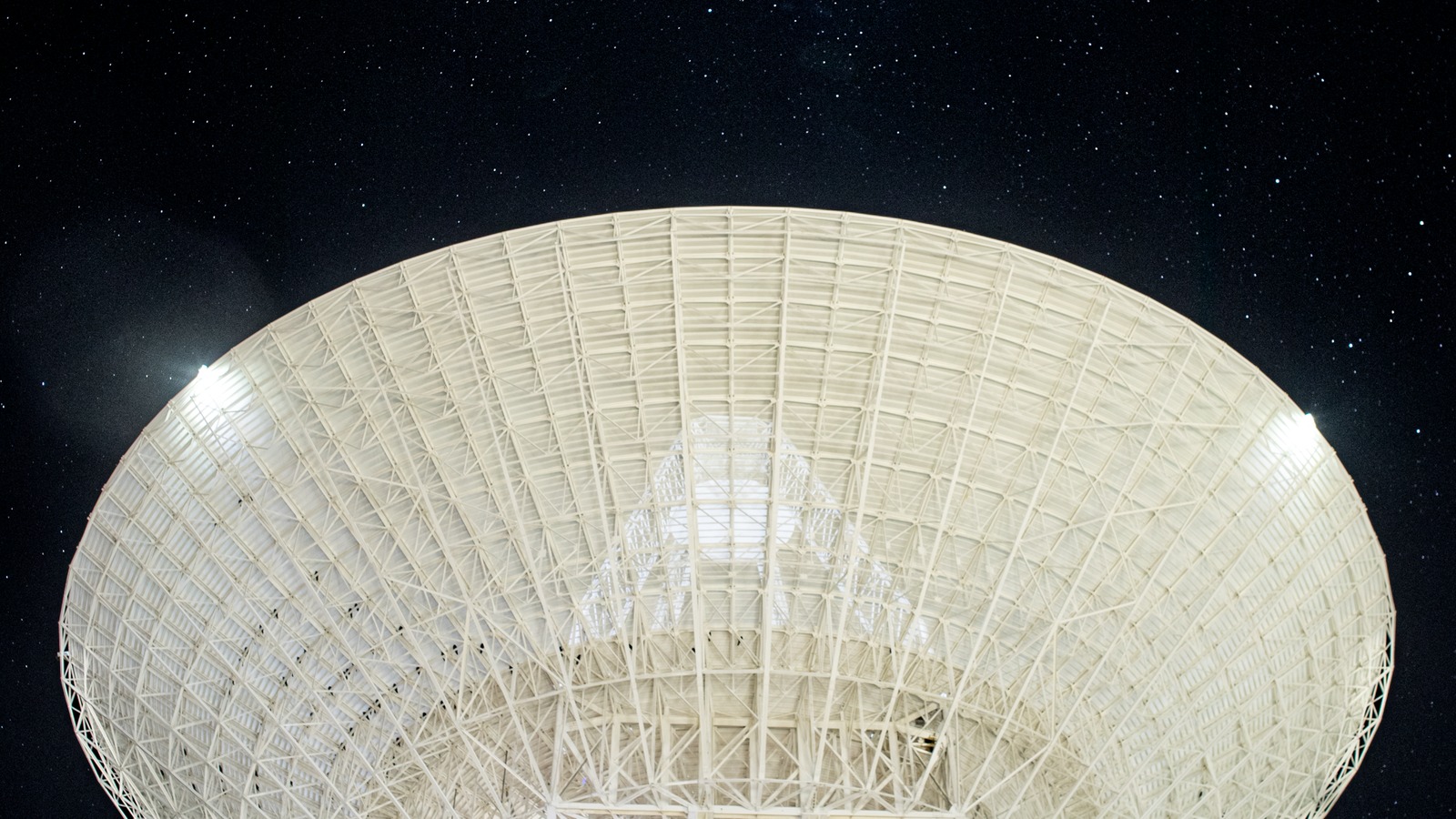
That is why Voyager 1 is built to protect itself. When something looks wrong on board, it can switch to backup hardware or put itself into a safe state without waiting for Earth. It is also why NASA relies on the Deep Space Network’s giant dish antennas, up to 230 feet (70 meters) wide, to pick out its faint signal.
Explore your sky tonightLive sky map for where you are: planets, the ISS and bright stars above your horizon.A record for whoever finds it
Voyager 1 does not travel empty-handed. It and Voyager 2 each carry a Golden Record, a 12-inch gold-plated copper disk. NASA calls it a kind of time capsule, meant to tell the story of our world to anyone out there who might find it. NASA says it holds spoken greetings in 55 languages, 35 sounds from life on Earth such as whale songs and laughter, 90 minutes of music from Mozart and Bach to Chuck Berry and Blind Willie Johnson, and 115 images. Symbols on its cover show where Earth is relative to several pulsars, and how to play it.
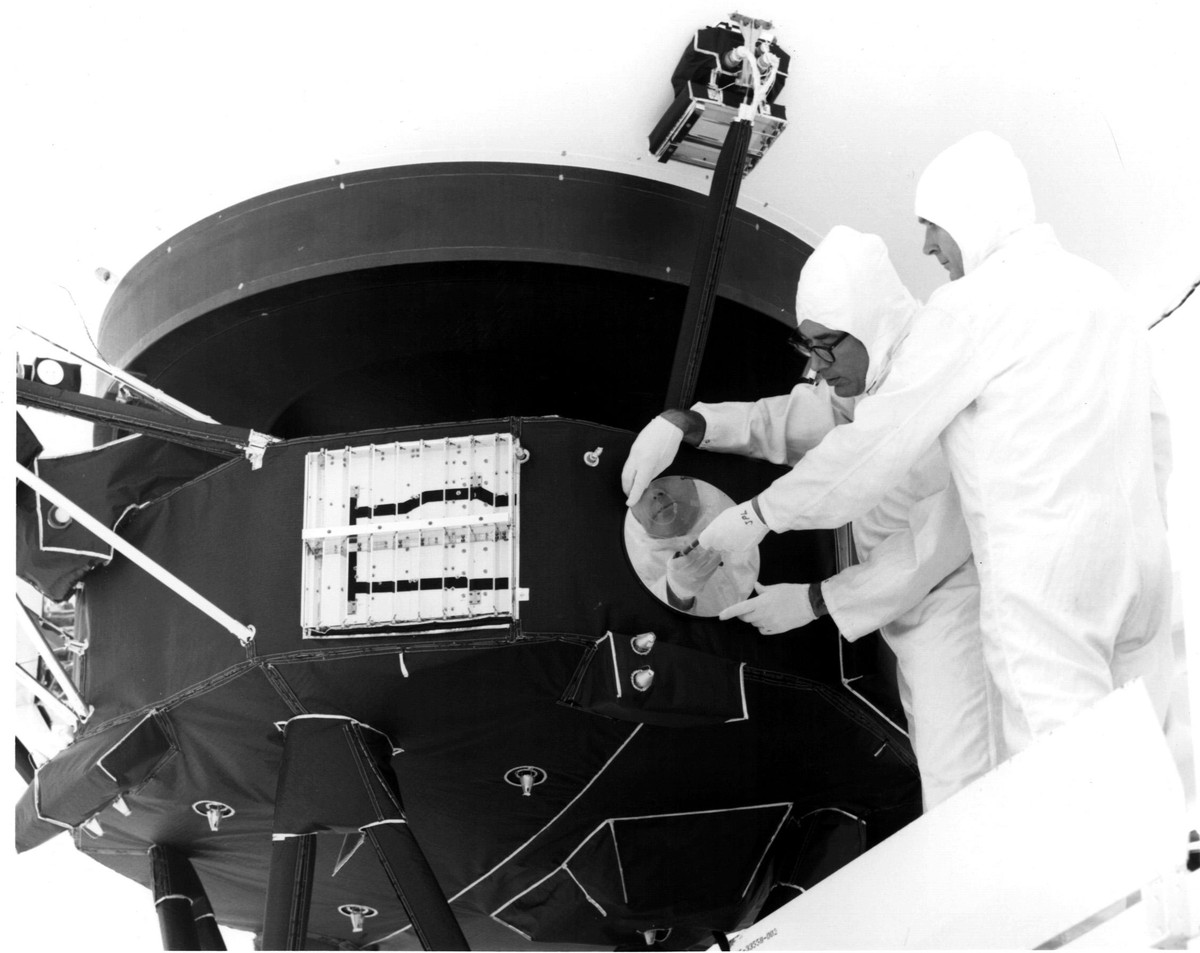
The record has no reader yet. It just keeps going, now a full day of light away from the people who made it.
Running on fading heat
The spacecraft is much quieter than it used to be. Its power comes from radioisotope thermoelectric generators, which turn heat from decaying plutonium into electricity, and NASA says both Voyagers lose about 4 watts of power every year. It is the same basic idea behind nuclear power plans for places where sunlight is not enough, like NASA’s proposed nuclear-powered rover for the Moon’s dark south pole. To keep Voyager going, the team switches things off.
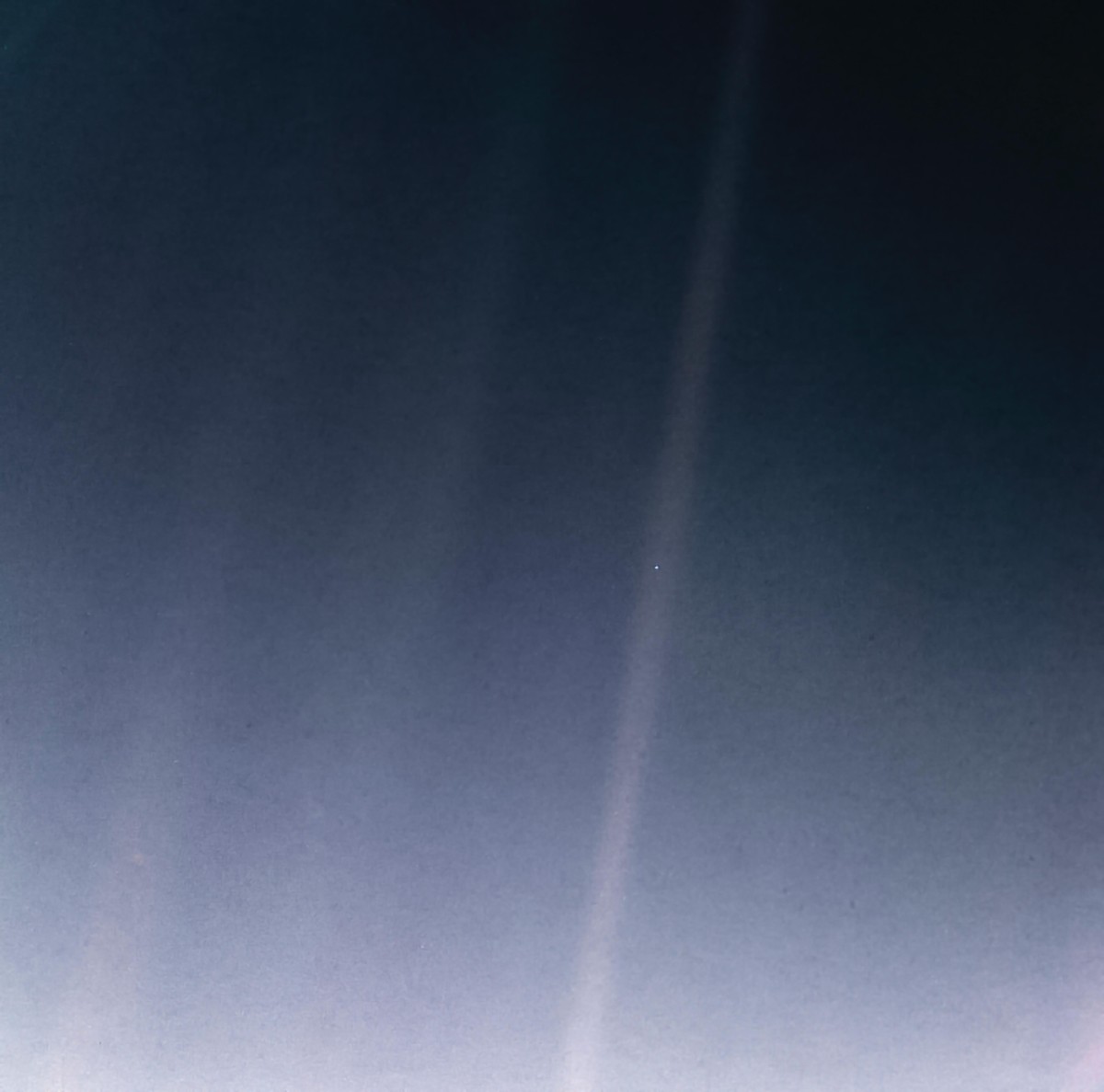
The cameras went first, in 1990. Before they did, on Feb. 14, 1990, Voyager 1 turned around and photographed Earth from about 3.8 billion miles away. It was the Pale Blue Dot, a speck in a sunbeam smaller than a single pixel (we wrote more about how small Earth looks from space). Voyager 1 is now more than four times farther away than when it took that picture.
In April 2026, engineers shut off Voyager 1’s Low-energy Charged Particles experiment, which had run almost without a break since 1977. As of April 2026, NASA listed two Voyager 1 science instruments still working: a magnetometer, which measures magnetic fields, and an instrument that listens to plasma waves.
In September 2026, engineers finished a power-saving fix nicknamed the “Big Bang.” They turned off three devices that help keep the spacecraft warm and switched on three lower-power ones, all at the same time. Heat matters out there: away from the Sun, space settles toward about −455°F (here’s why space is that cold), and fuel lines and instruments can freeze. Without the fix, NASA said, another Voyager 1 instrument would have had to go as early as summer 2027.
In October 2026, Voyager 1 briefly went quiet. On Oct. 18 and 19, the Deep Space Network could not hear its signal during two scheduled tries. On Oct. 20 the signal came back, before engineers had sent any commands. NASA said one group of thrusters had gone offline and their backups had switched on by themselves, a built-in safety response, and that engineers were still investigating the cause.
NASA confirms the crossing, and a data issue remains
On Nov. 19, 2026, NASA confirmed that Voyager 1 crossed one light-day from Earth at 5:16 a.m. EST on Nov. 18. Mission engineers used the carrier signal and trajectory calculations to confirm the milestone. Voyager team members at NASA’s Jet Propulsion Laboratory heard from the probe 24 hours later, the time it took for the spacecraft’s radio signal to reach Earth, early Thursday.
Even though the team has not received science and engineering data from Voyager 1 since Nov. 14, NASA said, the spacecraft is sending a carrier signal, which typically conveys that data to Earth. On Nov. 18, NASA said the Voyager 1 mission team became aware on Nov. 14 that the spacecraft had stopped sending science and engineering data after a Deep Space Network antenna in Canberra, Australia, locked on to the spacecraft and received a carrier signal, but no data. Engineers continue to analyze the issue and are working to determine the cause and next steps.
NASA said the carrier signal means Voyager 1’s Attitude and Articulation Control computer is keeping the spacecraft pointed at Earth, and that its antenna and broadcast equipment still work. The lack of data, NASA said, suggests the issue is with the onboard computer that collects data from the spacecraft’s subsystems, including science instruments, and formats it for transmission to Earth. Diagnosing the cause may take weeks or longer, because a radio signal takes 24 hours to reach the probe and another 24 hours to come back. The team is also investigating whether there is any connection to the October communications gap, when contact was lost for about 48 hours; NASA said the spacecraft resumed communication by itself and was operating normally until Nov. 14. In 2023, NASA said, Voyager 1 had a similar problem in which ground controllers received a carrier signal but no data; that issue was caused by one of the onboard computers, and the team’s experience with it is informing their approach now.
A wave of light for a ship that cannot see it
To mark the milestone, NASA invited people around the world to “Shine Bright for Voyager’s Light-Day” after sunset on Nov. 17, 2026: point a phone or flashlight at the sky and flash V-G-R, Voyager’s call sign, in Morse code. NASA called it a symbolic wave of golden light. NASA also scheduled a Nov. 19, 2026, discussion with mission members about the status of both Voyagers, with a preview of a NASA+ Voyager documentary planned for 2027, the mission’s 50th anniversary.
Voyager 2 took a different path, past Uranus and Neptune. NASA expects it to reach one light-day from Earth in November 2035.
Bottom line: Since 5:16 a.m. EST on Nov. 18, 2026, Voyager 1 has been more than one light-day from Earth, over 16.09 billion miles away and farther than anything humans have ever built. NASA confirmed the milestone on Nov. 19, using the carrier signal and trajectory calculations. NASA says the team has not received science and engineering data since Nov. 14, though a carrier signal is still getting through.
No Ground. Stay curious.