 No Ground
The short answer: air scatters blue light much more than red light. Sunlight is a mix of every color, and when it hits the gas molecules in our atmosphere, the blue part gets bounced around the sky in every direction. Look anywhere away from the Sun and that scattered blue light is what reaches your eyes.
That answer is right, but it leaves good questions hanging. Why blue and not violet, which scatters even more? Why are sunsets orange? Why are clouds white, and why is the sky black from the Moon? Here is the whole story, step by step.
Sunlight is every color at once
Sunlight looks white, but it is really all the colors of the rainbow traveling together. Shine it through a prism and it spreads out into red, orange, yellow, green, blue and violet. Each color is light with a different wavelength, the distance from one wave crest to the next. Red light has long, lazy waves, about 700 billionths of a meter (nanometers) from crest to crest. Blue light has shorter, choppier waves, around 450 nanometers. Violet is shorter still, around 400.
Light travels in a straight line until something gets in its way. A mirror reflects it, a prism bends it, and tiny particles can scatter it, sending it off in a new direction. Our atmosphere is mostly nitrogen and oxygen molecules, and those molecules are what do the scattering.
Why air picks out blue
Air molecules are far smaller than a wave of visible light. When light passes over something that small, it makes the electric charges inside the molecule shake back and forth, and the shaking molecule sends light back out in all directions. That is scattering.
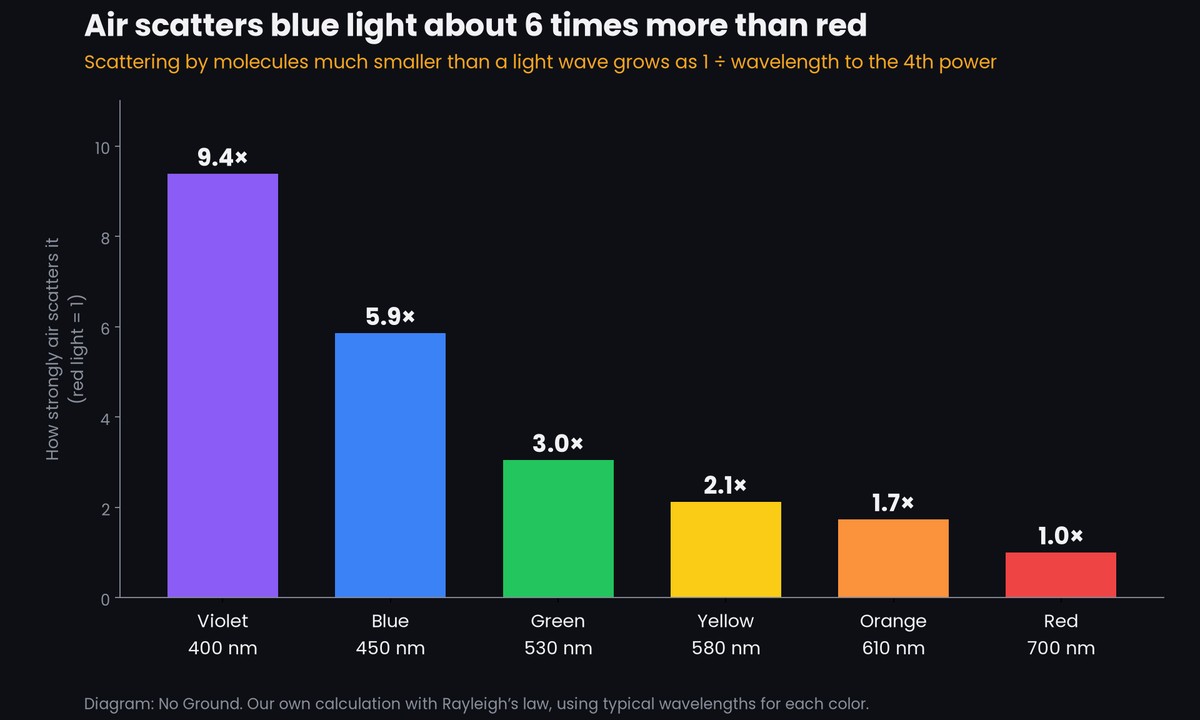
The key is how strongly it depends on color. In the 19th century, the British physicist Lord Rayleigh worked out that for particles much smaller than the light wave, scattering gets stronger with the inverse of the wavelength to the fourth power. In plain words: make the wave a little shorter and the scattering gets a lot stronger.
We ran the numbers for typical wavelengths of each color. Blue light at 450 nanometers is scattered about 5.9 times as strongly as red light at 700. Violet, at 400, is scattered about 9.4 times as strongly. Green lands in the middle at about 3 times.
So as sunlight streams through the air, a big share of the blue gets knocked sideways and bounced around the sky, again and again. The reds, yellows and greens mostly go straight through. When you look at a patch of sky away from the Sun, you are not looking at the Sun’s light directly. You are seeing light that air molecules redirected toward you, and that light is heavily tilted toward blue.
So why isn’t the sky violet?
If shorter waves scatter more, the sky should be violet. It is not, for three reasons that work together.
First, the Sun sends us less violet than blue to begin with. Second, NOAA notes that some violet is absorbed high in the atmosphere before it reaches us. Third, and most important, our eyes are much less sensitive to violet than to blue. The color sensors in your eye, called cones, respond strongly to blue and green and only weakly to violet.
The light coming from the sky is actually a blend of violet, blue and some green, with a little of everything else. Physicist Glenn Smith showed in a 2005 paper that our eyes read that exact blend as a pale, slightly washed-out blue. In other words, “sky blue” is partly physics and partly the way human vision works. An animal with different eyes might describe the sky differently.
Explore your sky tonightLive sky map for where you are: planets, the ISS and bright stars above your horizon.The same mixing explains why the sky looks deepest blue straight overhead and paler, almost white, near the horizon. Light from low in the sky has passed through much more air, so it has been scattered and re-scattered so many times that the colors blend back toward white.
Why sunsets turn orange and red
At noon, sunlight comes down through the atmosphere on a fairly short path. At sunrise and sunset, it comes in sideways and has to skim through far more air to reach you.
How much more? We did a rough estimate. Most of the air is packed into the bottom few miles, so think of it as a layer about 5 miles thick. Straight up, light crosses about 5 miles of that layer. Coming in from the horizon, it travels roughly 200 miles through it, around 40 times as much air.
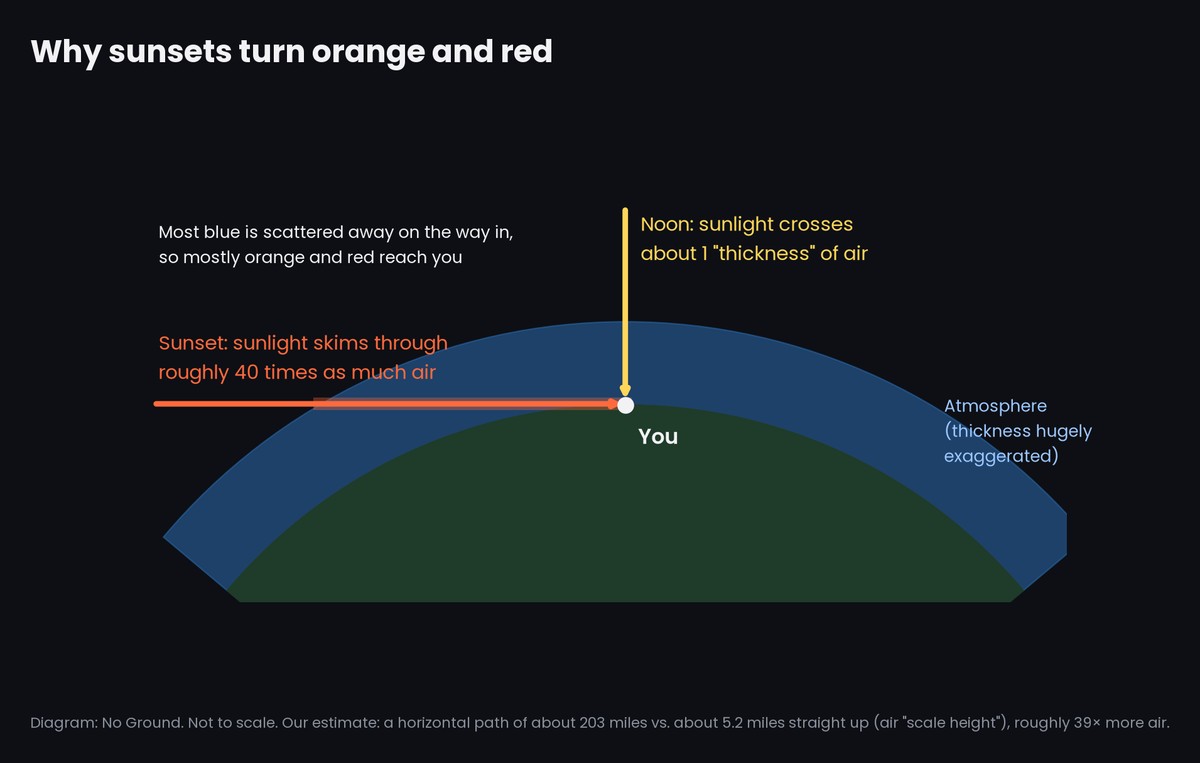
Along that long path, nearly all the blue gets scattered out of the beam before it reaches you. What is left is mostly yellow, orange and red, so the Sun and the clouds around it glow warm colors. Dust, smoke, pollution and water droplets can make it even more dramatic, because these larger particles scatter and reflect even more of the remaining light, sometimes setting the whole western sky on fire.
There is a lovely side effect: while you watch an orange sunset, the blue light that was scattered out of your beam is lighting up someone else’s afternoon sky farther west.
Why clouds are white
Clouds are made of water droplets and ice crystals that are much bigger than a wave of light. Particles that big do not play favorites. They scatter all colors about equally, so the light coming off a cloud is a mix of every color, and every color mixed together looks white. When a cloud gets thick enough to block sunlight from above, it turns gray instead.
And in case you have wondered: the ocean is not blue just because it reflects the sky. NOAA explains that water itself absorbs red light, which leaves the blue for us to see. The sky and the sea are blue for two different reasons.
The sky on other worlds
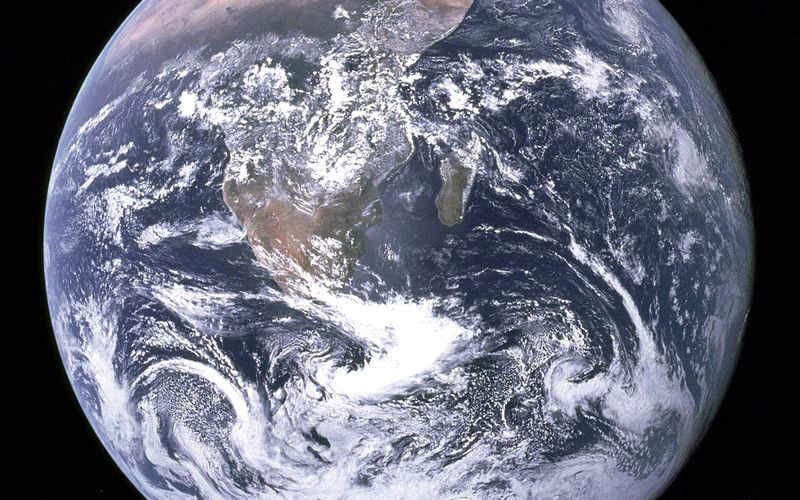
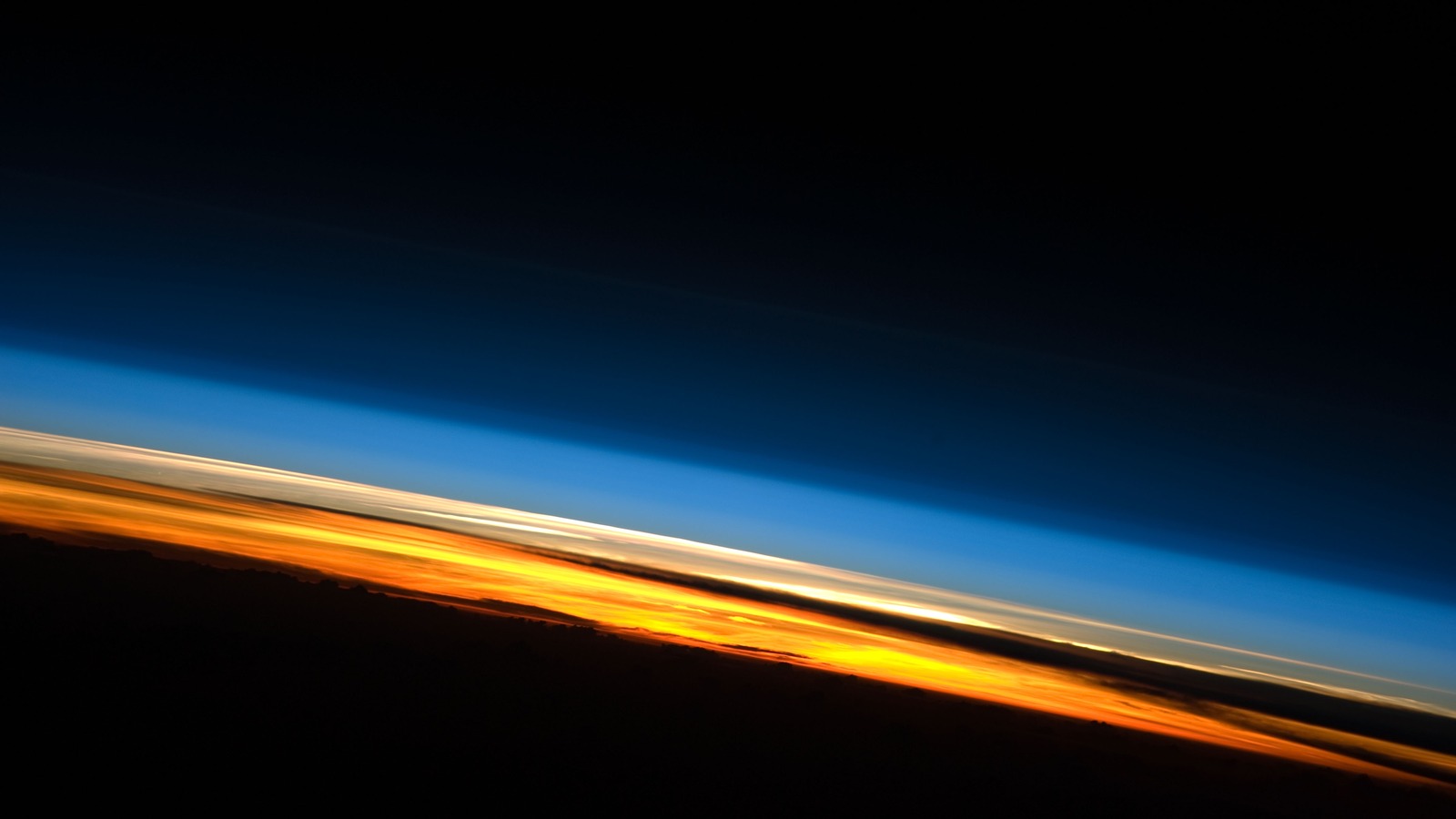
Take the air away and the blue goes with it. On the Moon, which has almost no atmosphere, Apollo photos show astronauts standing in bright sunlight under a pitch-black sky. Above most of our air, it is the same: astronauts see a thin glowing line of atmosphere along Earth’s edge and black space beyond it. That darkness is also a hint of how cold and empty space really is. From far enough away, the whole planet becomes one pale sphere wrapped in a thin blue shell.
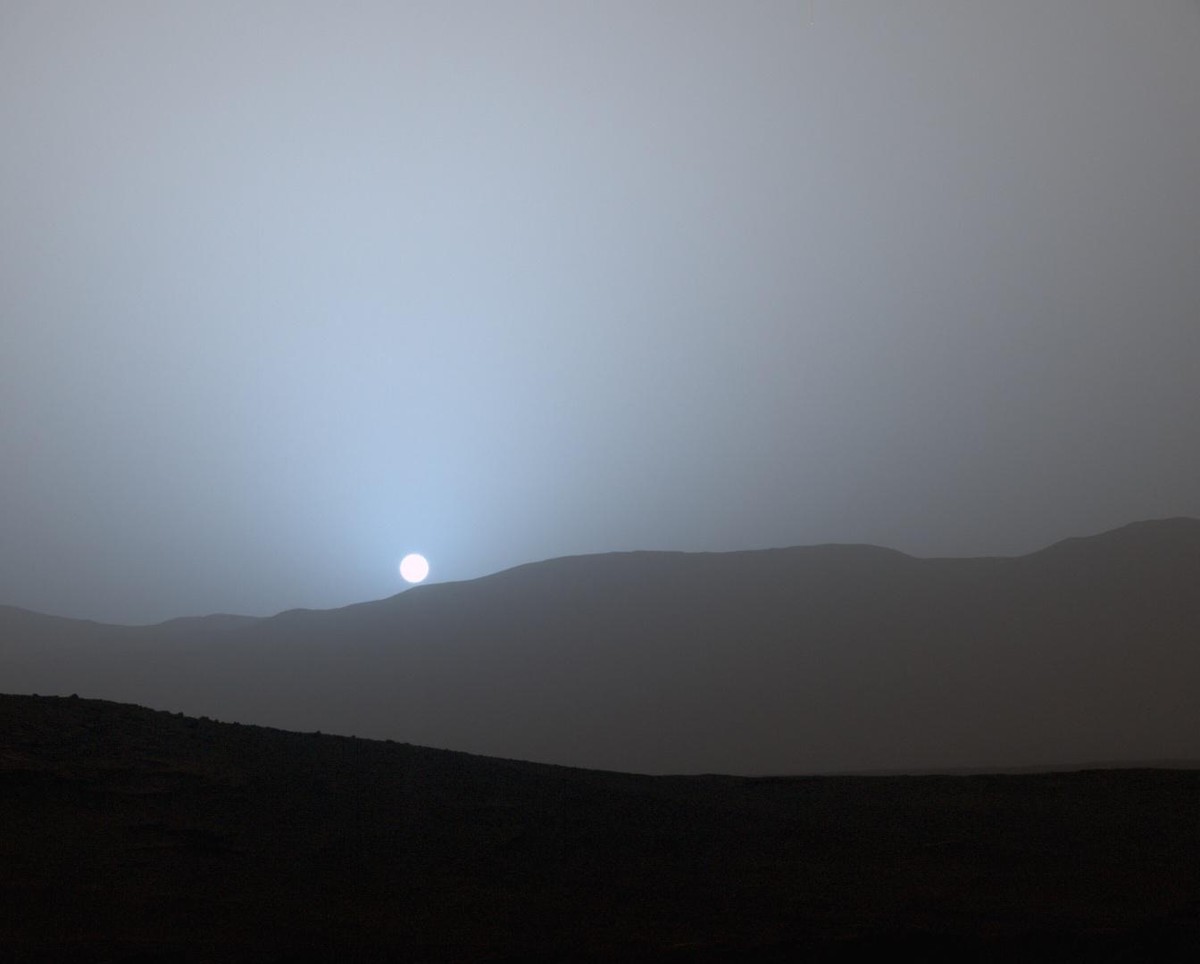
Mars flips Earth’s colors. Its air is thin and full of fine dust. In daytime, NASA says, the Martian sky looks orange or reddish. But at sunset, the sky around the Sun turns blue-gray, because the fine dust lets blue light through more efficiently close to the Sun’s direction. NASA’s Curiosity rover photographed exactly that on April 15, 2015. That dust, as Perseverance has found, is even finer than scientists expected.
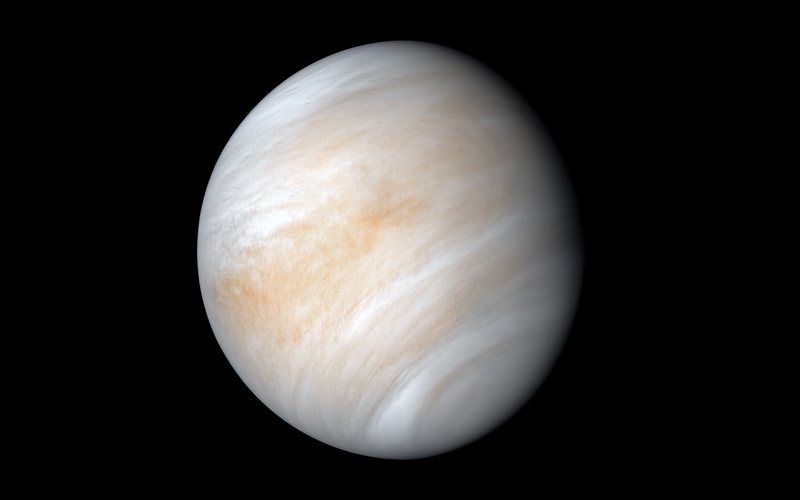
Venus is different again: its crushing, cloud-choked atmosphere filters sunlight so heavily that the surface is a dim, hazy place, one of many reasons landing on Venus would go badly.
Bottom line: The sky is blue because tiny air molecules scatter short, blue light waves about six times more than long, red ones. It is not violet because the Sun sends less violet, some is absorbed, and our eyes barely notice it. Sunsets are orange because their light crosses dozens of times more air, which strips the blue out on the way to you.