 No Ground
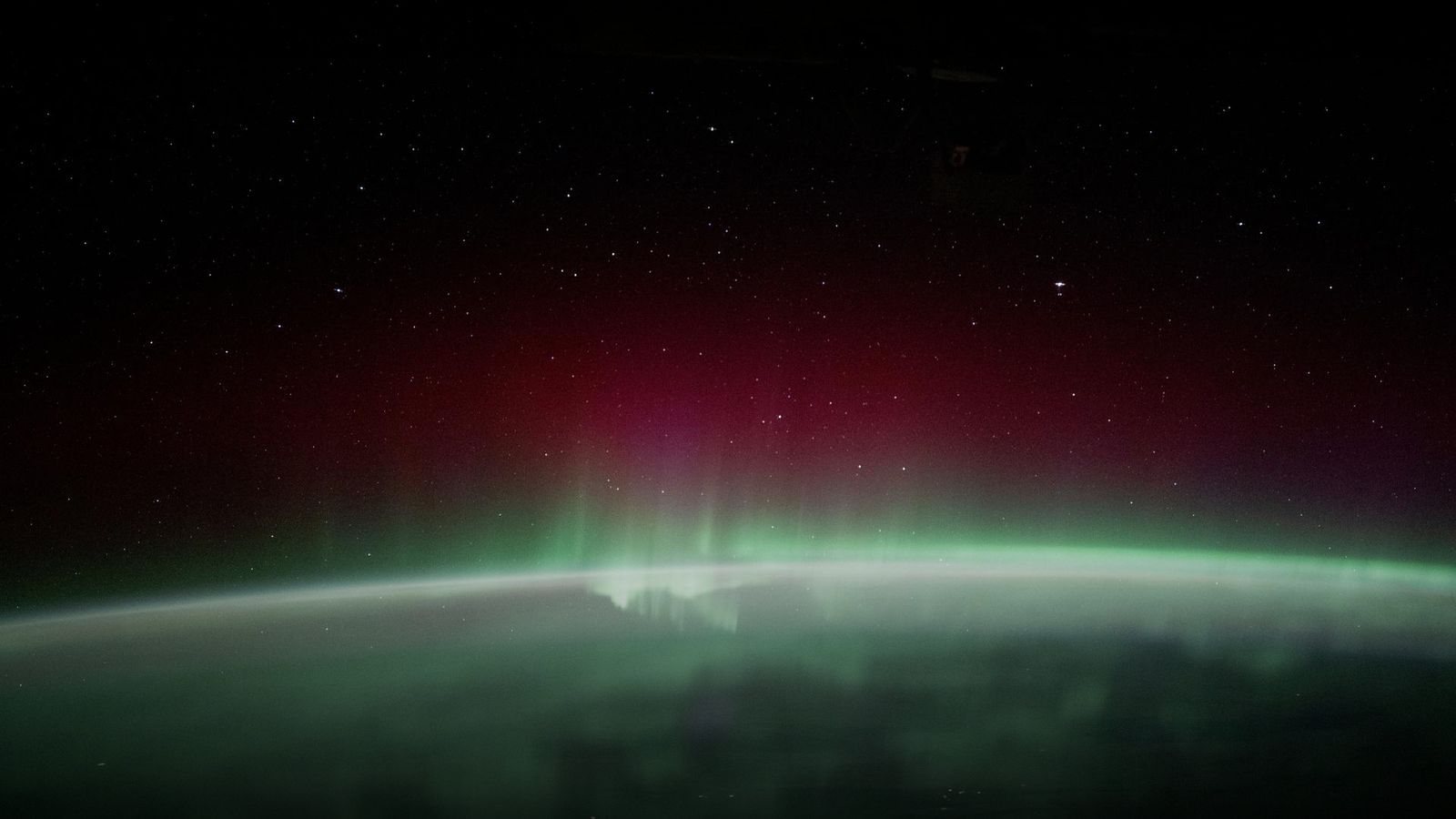
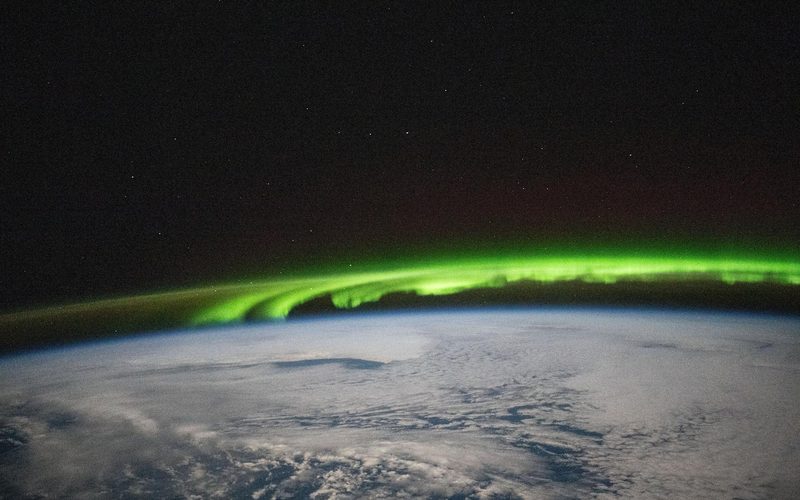
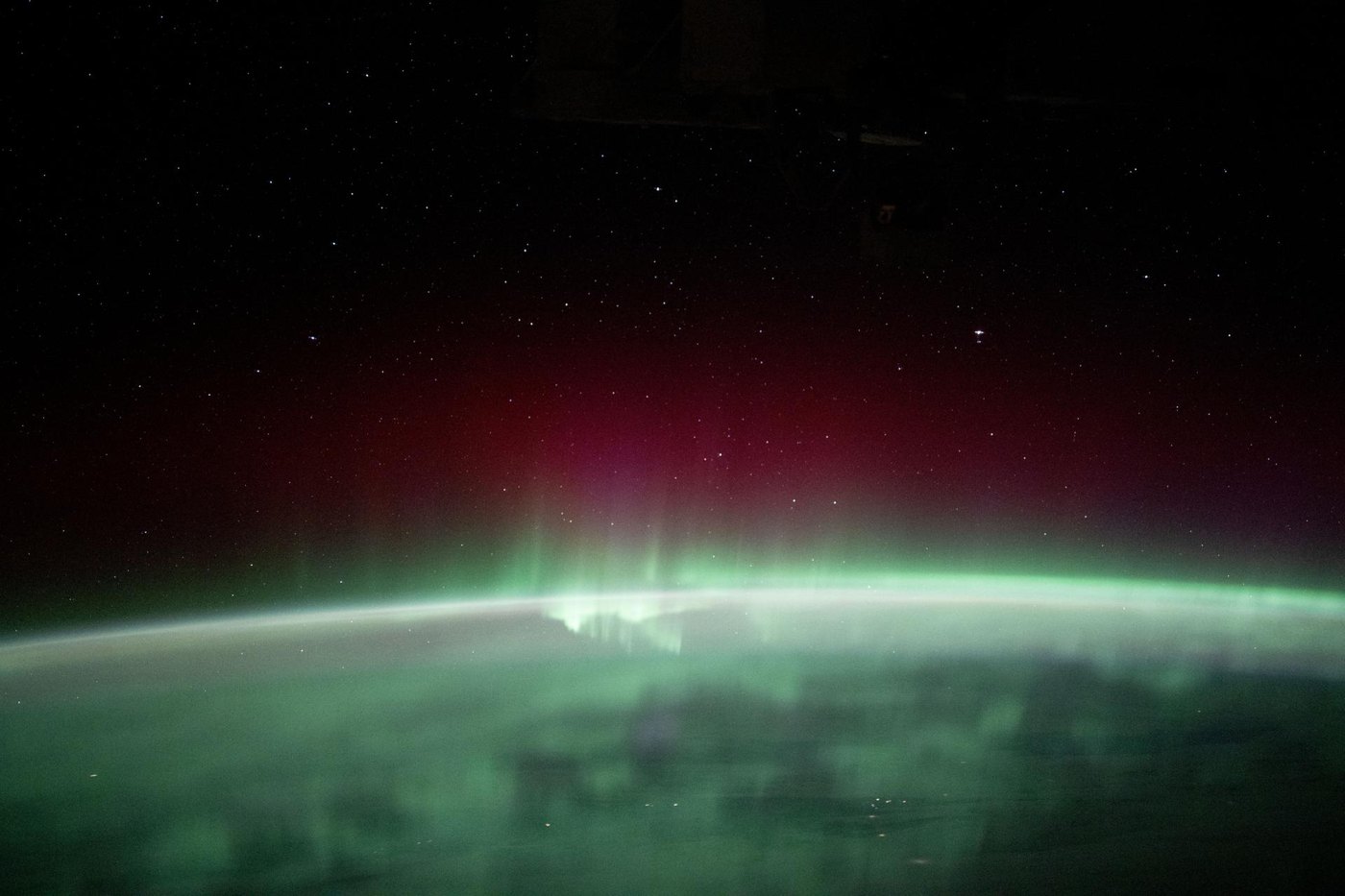
Two sky shows were lined up for the week of Oct. 20, but expectations were modest. NOAA had a minor (G1) geomagnetic storm watch for the night of Tuesday, Oct. 20, so the northern lights could reach high latitudes. Then the Orionid meteor shower, made of bits of Halley’s Comet, peaked on the night of Oct. 21–22.
Aurora watch, Oct. 20: what NOAA forecast
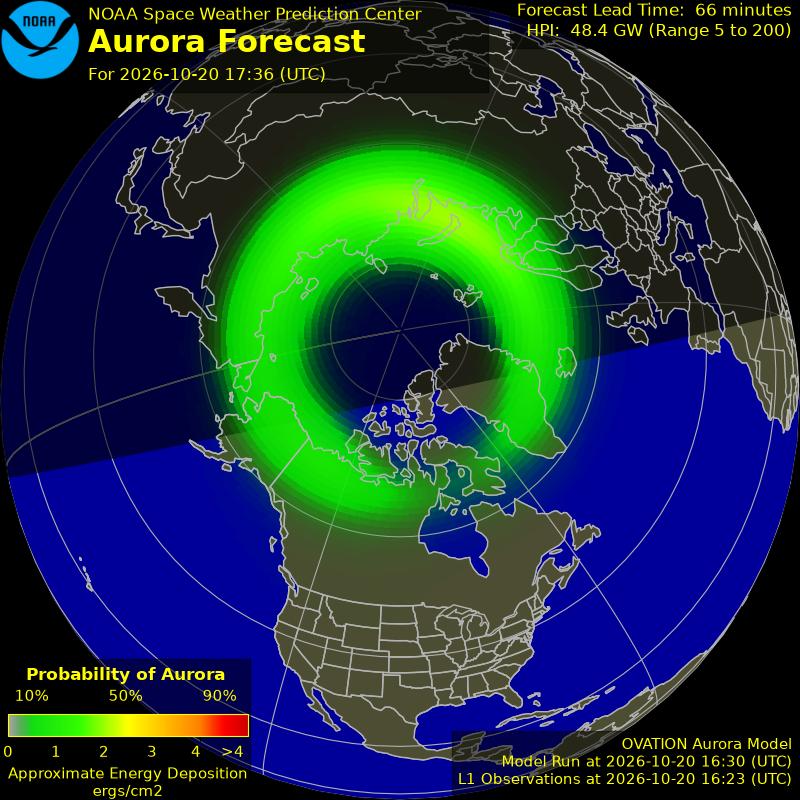
NOAA’s Space Weather Prediction Center (SWPC) said G1 (Minor) storming “is likely 20 Oct due to positive polarity coronal hole high speed stream effects.” A coronal hole is an open patch in the Sun’s outer atmosphere, and it lets out a faster stream of solar wind.
- Peak forecast: Kp 4.67 (that counts as G1) between 5 and 8 p.m. ET on Oct. 20, according to SWPC’s three-day forecast issued at 8:30 a.m. ET that day.
- Later that night: Kp 3.33 from 8 to 11 p.m. ET and 3.67 from 11 p.m. to 2 a.m. ET. That’s active, but below storm level.
- Oct. 21–22: forecast below storm levels.
Who might see the northern lights?
Probably not most of us. In NOAA’s official scale, a G1 storm means aurora “is commonly visible at high latitudes (northern Michigan and Maine).” So the best chances were in Canada, Alaska and maybe the very northern tier of the U.S., under dark, clear skies.
Two honest caveats:
Find the Orionids radiant in your skyLive sky map: where the meteors seem to come from, and when that spot is highest.- Forecasts miss. NOAA’s G1 watch also predicted minor storming for Oct. 19, and it didn’t happen. The highest Kp observed in the 24 hours before the Oct. 20 morning forecast was only 2.
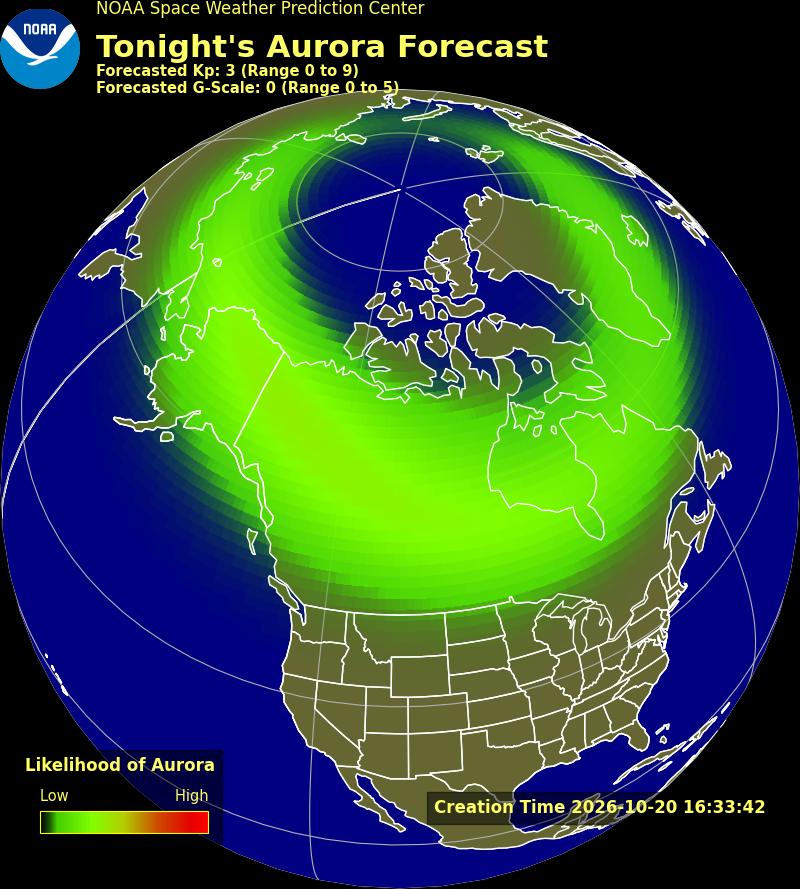
- NOAA’s own tools disagreed a little. SWPC’s experimental “Tonight’s Aurora Forecast” map, created at 12:33 p.m. ET, listed a forecast Kp of 3 and a G-scale of 0. Things can change quickly, so the evening forecast was worth a second look.
New to Kp and G-scales? Our guide to reading space weather alerts explains what the numbers mean.
Orionid meteor shower 2026: peak night Oct. 21–22
NASA lists the Orionids’ peak night as Oct. 21–22. Under dark skies that meant about 10 to 20 meteors per hour. The shower ran from Oct. 2 to Nov. 7, so a few showed up on other nights too.
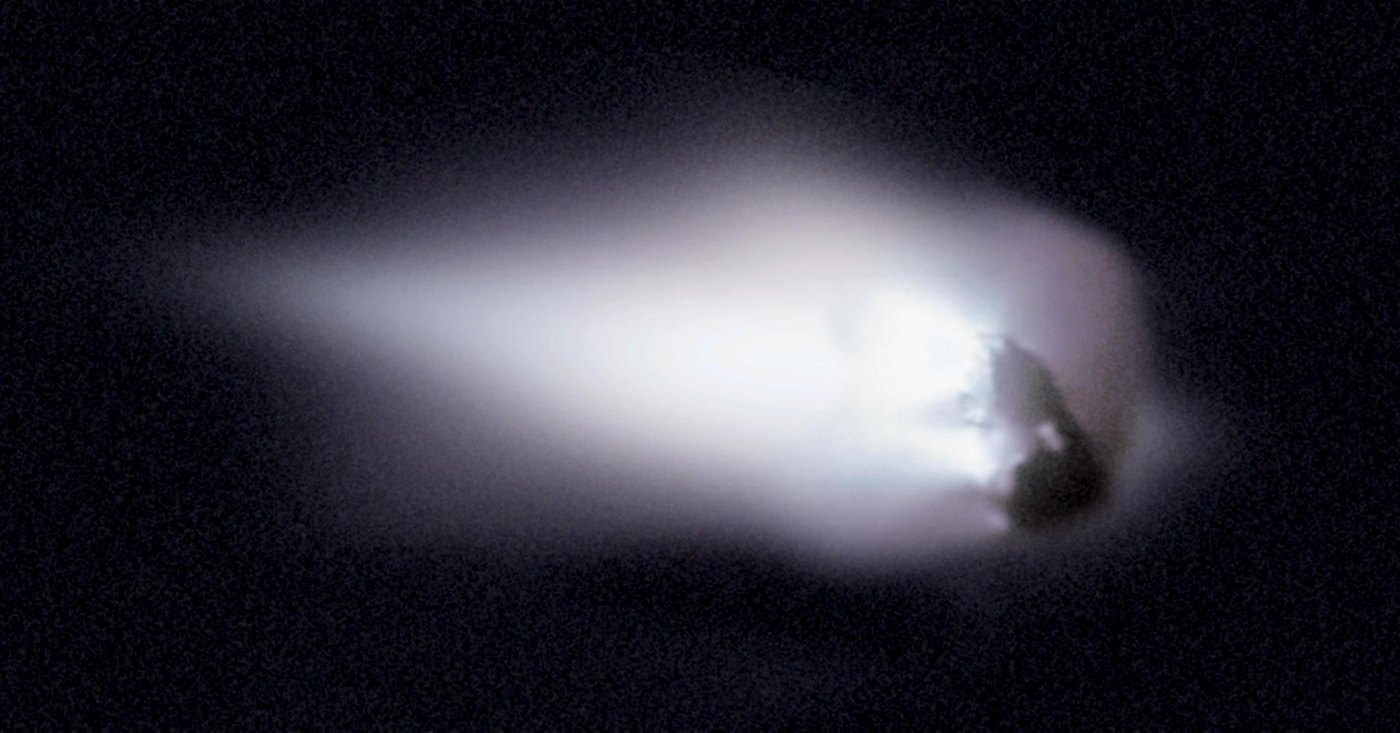
- Where they come from: debris from Halley’s Comet (1P/Halley), NASA says.
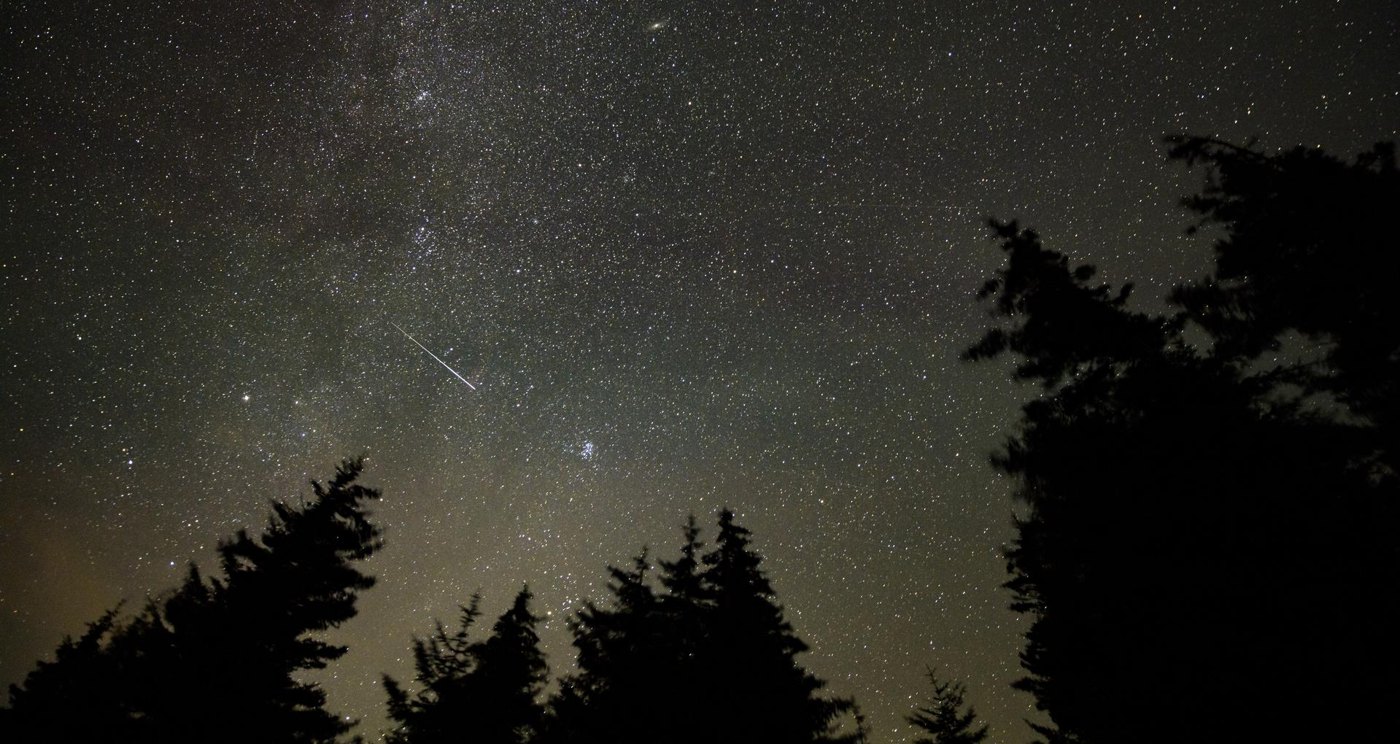
- Where to look: the meteors seem to come from a point just north of Betelgeuse, the bright star in Orion. They can show up anywhere in the sky.
- How fast: about 41 miles (66 km) per second, NASA says. Fast meteors can leave glowing trails.
- Best time: the dark hours before dawn.
Viewing tips for aurora and the Orionids
- Get away from lights. City glow hides faint aurora and faint meteors.
- Face north for aurora and look low on the horizon. A weak aurora can look like a pale grey-green glow, and a phone camera often picks it up better than your eyes.
- For meteors, look up at a wide patch of sky. You don’t have to stare at Orion.
- Give your eyes time to adjust to the dark, and skip the bright phone screen.
- Check the clouds. No forecast helps if the sky is overcast.
- Re-check SWPC in the evening. Space weather forecasts update through the day.
No Ground. Stay curious.