 No Ground
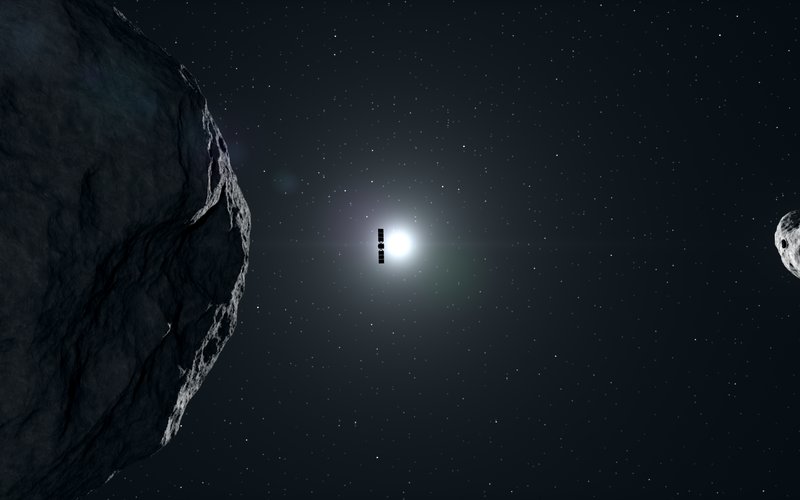
On Tuesday, ESA said its Hera spacecraft has seen two asteroids where there used to be one dot. In about a week, Hera is due to reach them. It will not go into orbit, because there is almost nothing there to orbit. Instead, it will glide past them, on purpose, to look at the scene of a 2022 collision.
Two dots instead of one
Using its Asteroid Framing Camera from about 1,280 kilometers away, Hera resolved Didymos and its moon Dimorphos as two separate bodies for the first time, ESA says. (ESA’s release lists an image date that does not match the calendar, so we are not stating one.) “Before this acquisition the spacecraft was still resolving the Didymos system as a single dot,” said Michael Kueppers in the release. Dimorphos is only around one pixel across in the new image, he said, but it is “clearly well separated from its parent body.”
The system is about 197 million kilometers from Earth. ESA says the two braking burns, a week apart, slowed Hera to just 20 meters per second relative to the asteroids. Dimorphos is 151 meters across, which ESA compares to the Great Pyramid of Giza. Didymos is 780 meters, a little smaller than the Burj Khalifa. They orbit an average of 1.15 kilometers apart. (NASA’s 2022 DART release gave Dimorphos as about 160 meters.) “For the very first time we are seeing through Hera’s own eyes the very double asteroid system that the mission was designed and built for,” said mission manager Ian Carnelli.
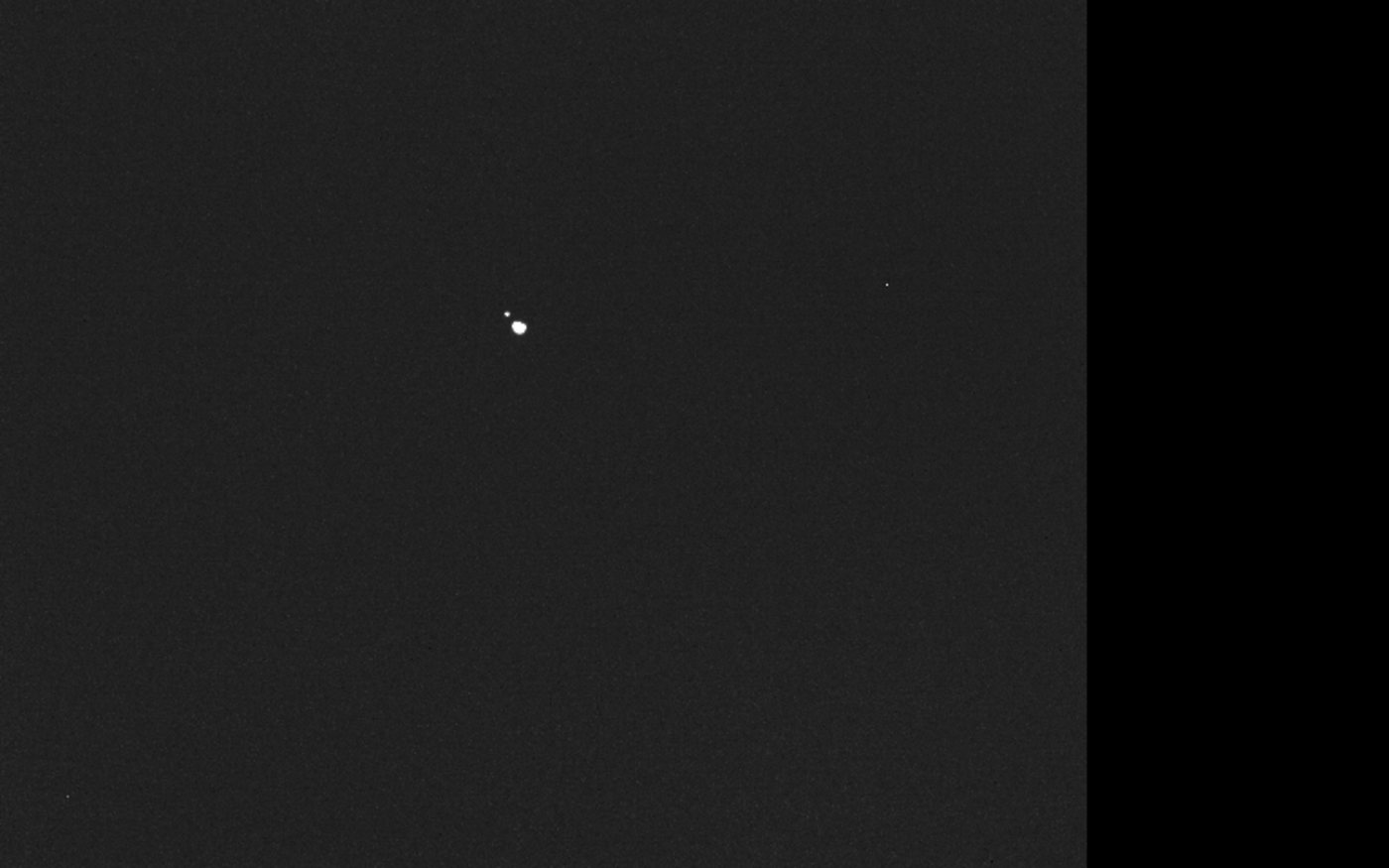
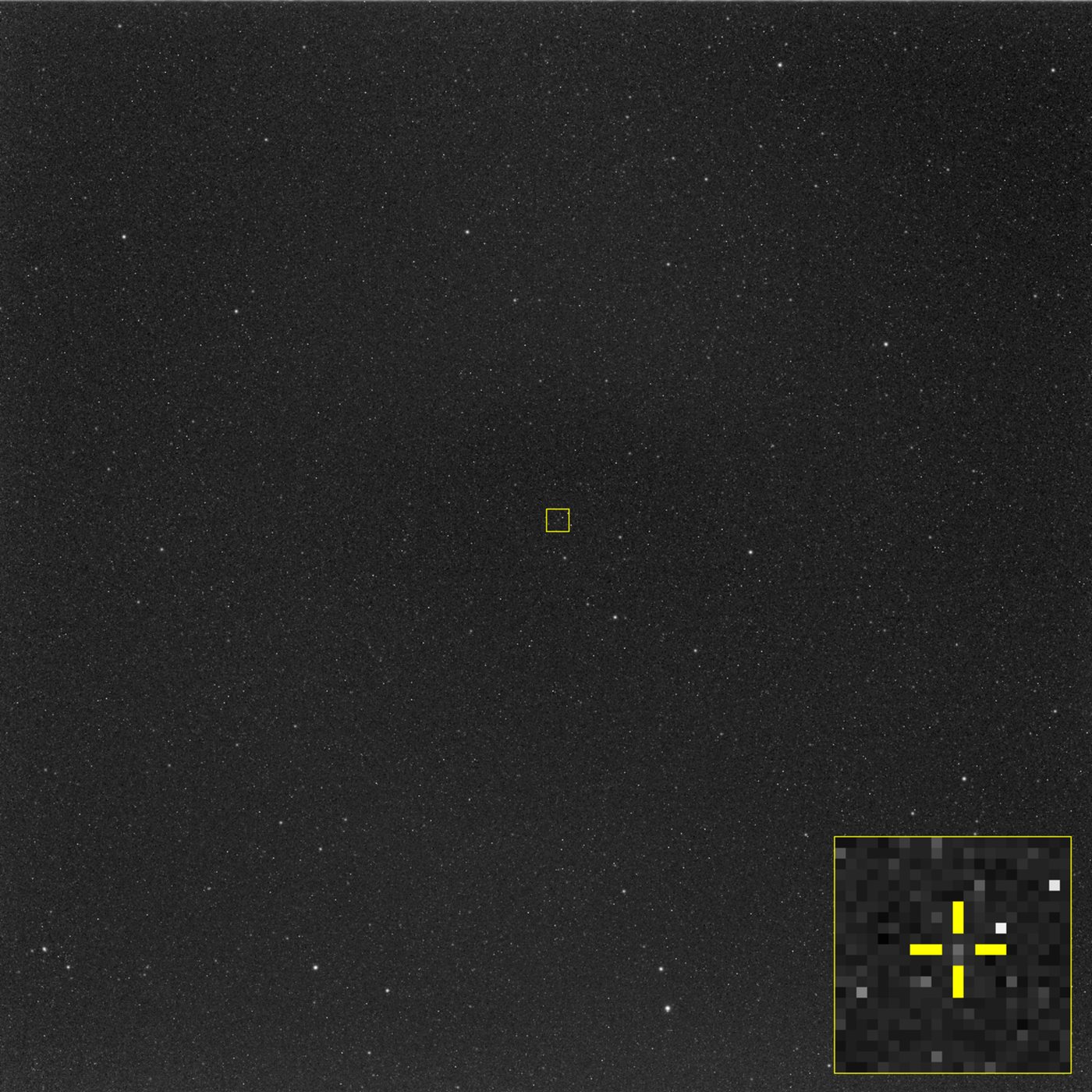
It is a big step from three weeks ago. On Oct. 7, ESA published Hera’s first picture of Didymos: a single bright point among the stars, smaller than a pixel, from about 236,500 kilometers away.
Two years of flying away, then braking
ESA’s Hera launched on Oct. 7, 2024. ESA says it has been hurtling away from Earth ever since. On Oct. 7, 2026, ESA reported it was flying at more than 12 kilometers per second relative to Earth, having crossed Mars’s orbit and now closing in on the orbit of the Didymos asteroids. To meet them, it has to come close to matching their velocity, which means braking.
That is what the last two weeks were for. ESA planned a first braking burn of 93 minutes on Oct. 15 to cut Hera’s velocity relative to the asteroids by a few hundred meters per second (we covered that day here), and the Hera team later said it was within required parameters. A second burn of about 31 minutes followed on Oct. 22. ESA’s Hera team said it cut Hera’s velocity relative to the asteroids by 70 meters per second, from 2,300 kilometers away, and that Hera was then moving at 20 meters per second relative to them. Three smaller “transition” maneuvers at the end of October are meant to bring that down to near zero.
Why it can’t park
Both asteroids are tiny, and so is their gravity. ESA estimates that gravity at Didymos is about 40,000 times weaker than Earth’s, and at Dimorphos about 200,000 times weaker.
Explore your sky tonightLive sky map for where you are: planets, the ISS and bright stars above your horizon.That is so little that a normal orbit does not work. ESA says Hera must instead move around the pair’s common center of gravity at a typical relative speed of around 12 centimeters per second. That is under 5 inches a second (our conversion). Its path will be a series of “hyperbolic arc” flybys, a technique first used by ESA’s Rosetta at comet 67P: shorter arcs of three days woven with longer arcs of four days, in a weekly cycle that brings it within 20 to 30 kilometers of Dimorphos’s surface.
Hera will need ongoing course corrections to keep its distance, ESA says, or it will gradually drift away. ESA describes the technique as “inherently safe”: if any single maneuver fails, Hera drifts away from the asteroids rather than risking an impact.
What it is there to see
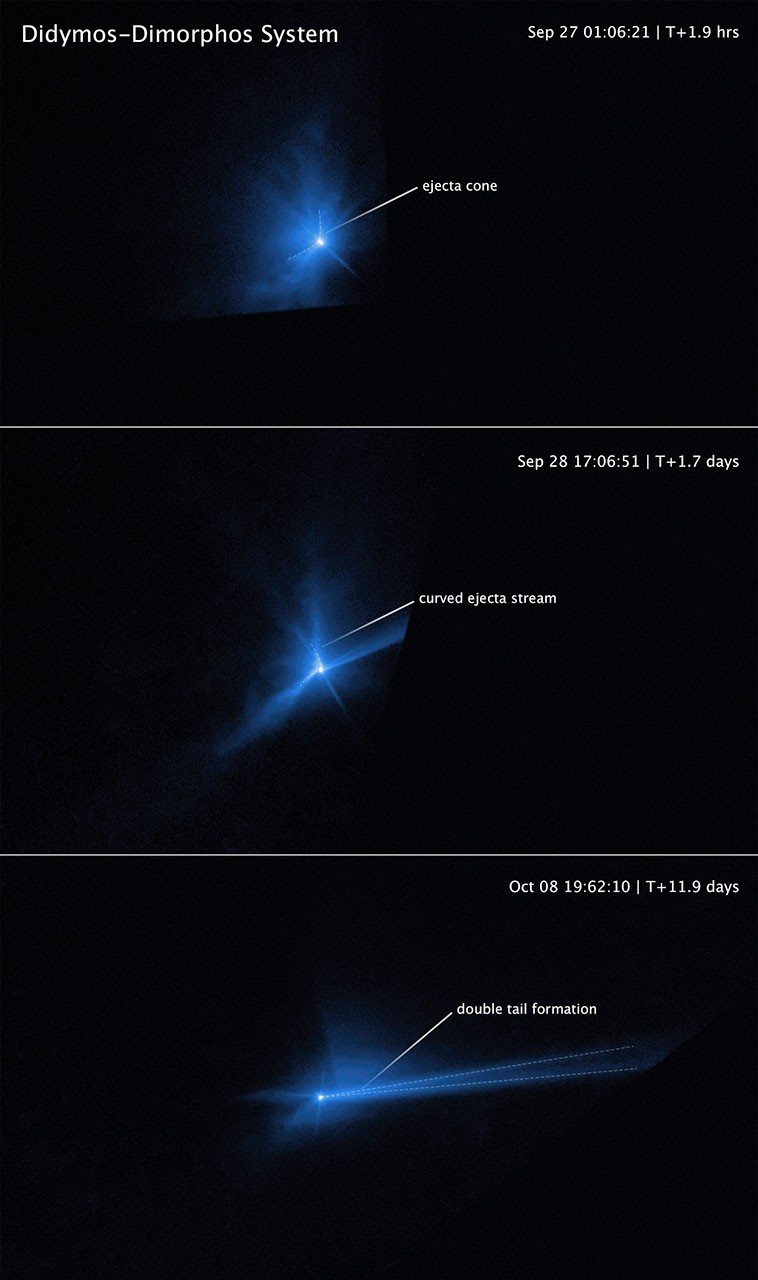
On Sept. 26, 2022, NASA’s 580-kilogram DART spacecraft deliberately hit Dimorphos at about 6.1 kilometers per second to change its orbit around Didymos. It shortened the moonlet’s orbit by 33 minutes, give or take a minute, which was much more than predicted. ESA calls Dimorphos the first Solar System object to have been transformed by human action, and describes Hera’s job as a “close-up crash scene investigation”: measuring how the asteroid responded to the impact. ESA lists 12 instruments, counting those on Hera’s two CubeSats, Juventas and Milani. The aim, ESA says, is to turn the DART experiment into a well-understood and potentially repeatable planetary defense technique.
When it “arrives”
ESA’s mission page gives Hera’s rendezvous as November 2026, without a date. A space-news outlet, Orbinauts, citing ESA’s mission timeline, lists the first proximity maneuver on Nov. 4 at 01:00 UTC, which is 8 p.m. ET on Nov. 3. That would start an early characterization phase at 20 to 30 kilometers. ESA’s Oct. 27 release does not give an arrival date, but it says the first detailed images of Dimorphos will be unveiled on Nov. 25. We could not confirm that time on an ESA page ourselves, and plans like this can slip, so treat it as a plan, not a promise.
Update, Nov. 7: Hera’s first close-up shows the side DART never saw
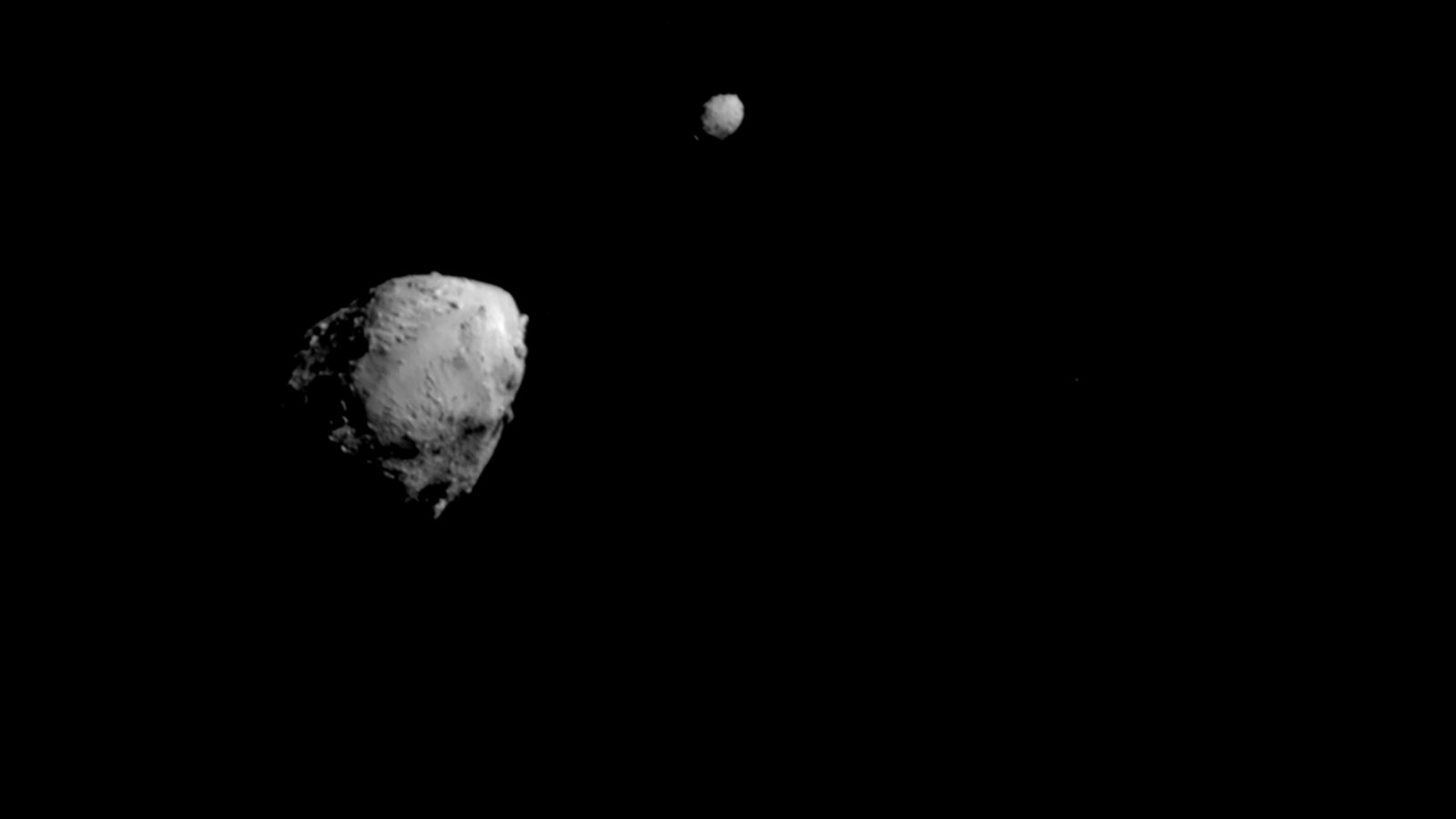
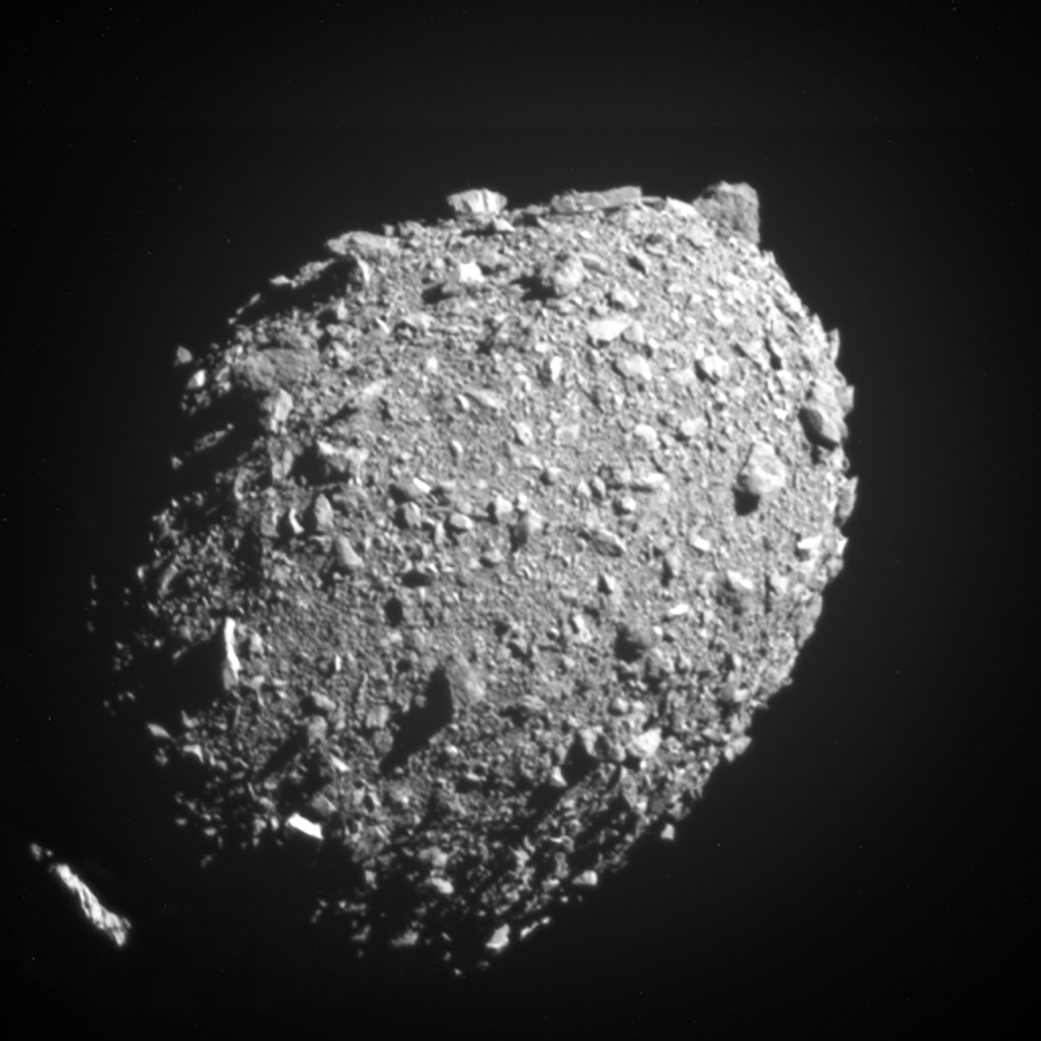
ESA released Hera’s first close-up picture of the Didymos pair on Thursday, Nov. 5, 2026. Hera’s black-and-white Asteroid Framing Camera took it from about 60 kilometers (37 miles) away. The 780-meter Didymos is clear. Its moonlet, the 151-meter Dimorphos, is in the frame too, but almost all of it is hidden in shadow.
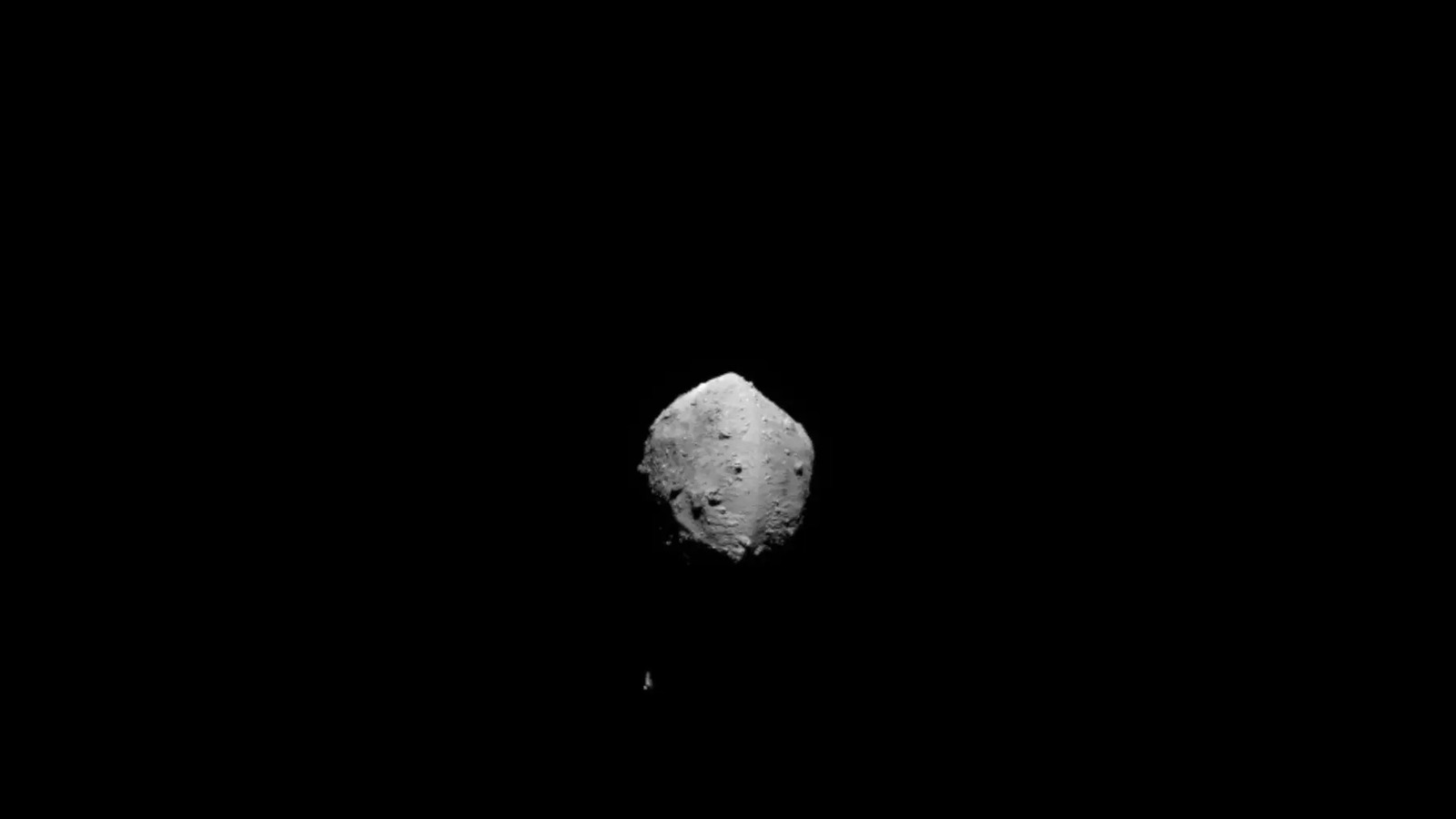
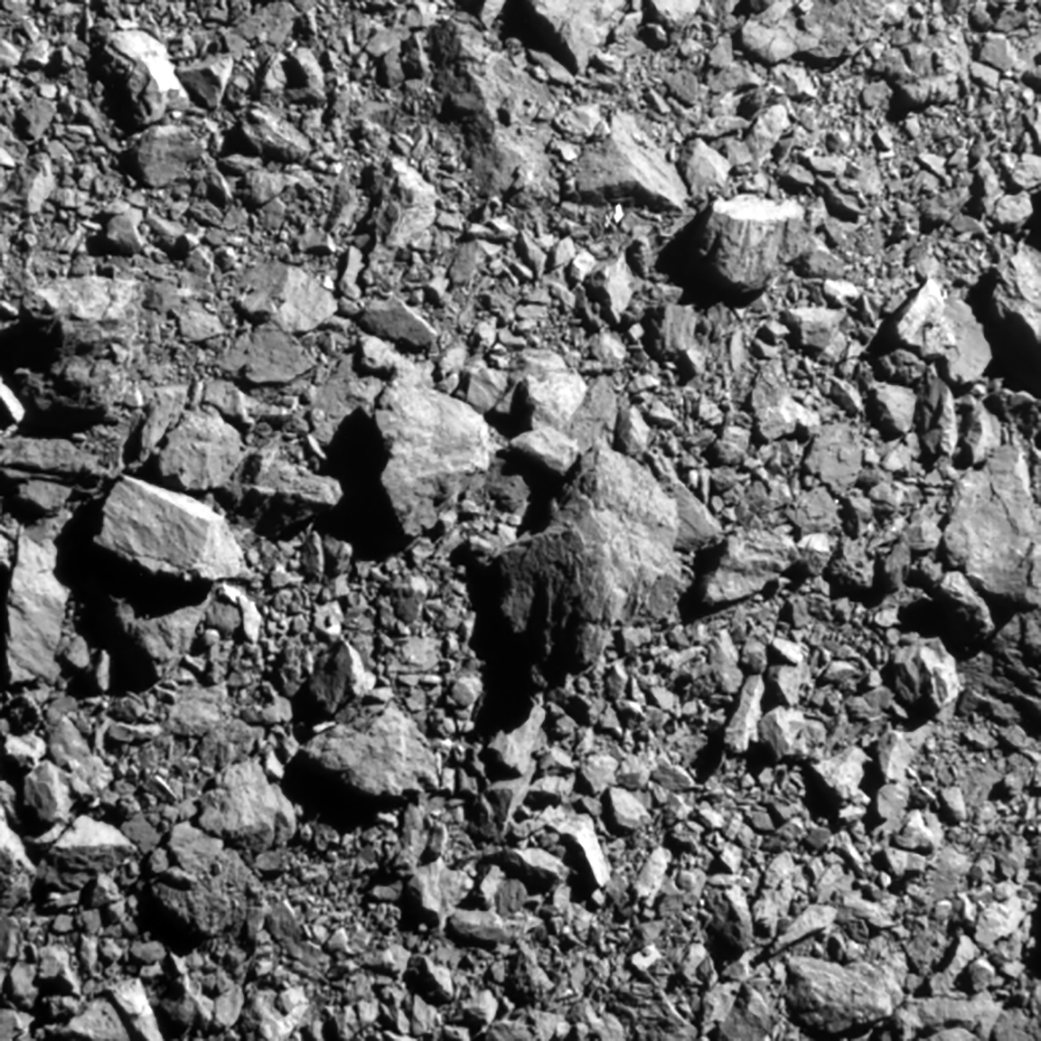
In 2022, DART photographed Didymos just before it crashed into Dimorphos. Hera is looking at the other side. “The first thing we said was wow!” said Hera Principal Investigator Patrick Michel of CNRS / Observatoire de la Côte d’Azur. “This is the other side of Didymos from the one that DART’s camera showed us shortly before impact, so this feels like looking at a whole new world.”
Michel said this side has the same ridge around the equator that DART saw, but otherwise looks very different, with many boulders and craters and what look like patterns of grooves or ridges.
Some of that may be debris from the crash. The two asteroids are only about 1 kilometer apart. ESA mission scientist Michael Kueppers said a lot of material blasted off Dimorphos by the impact may have landed on Didymos, and some of the features in the new image could come from that. “We have exciting work ahead of us to sort it out,” he said.
ESA says detailed images of both asteroids will be revealed on Nov. 25, 2026, at an event in Berlin. They should show for the first time what DART did to Dimorphos: whether it left a crater, reshaped the asteroid, or both. Later, Hera and its two small CubeSats, Milani and Juventas, will measure Dimorphos’ mass, surface and inside structure.
Bottom line: Hera is not going to stop at the asteroids. It is going to keep passing them, slowly, on purpose, close enough to see what a human-made impact left behind.
Watch the reel on the NO GROUND Facebook page.
No Ground. Stay curious.