 No Ground
The next three weeks have a good run of sky events, and none of them need a telescope. Here is the order they come in.
Nov. 12: the Northern Taurids
The Northern Taurids peak around Nov. 12. Under ideal conditions NASA’s guide counts about five meteors an hour, so this is a quiet shower. The Moon is new on Nov. 9, so its light will not get in the way. The Taurids are slow and sometimes bright, and the Southern Taurids, which peaked around Nov. 5, can throw a fireball. Give it a few minutes of looking away from city lights.
Nov. 15 and 16: Mars and Jupiter side by side
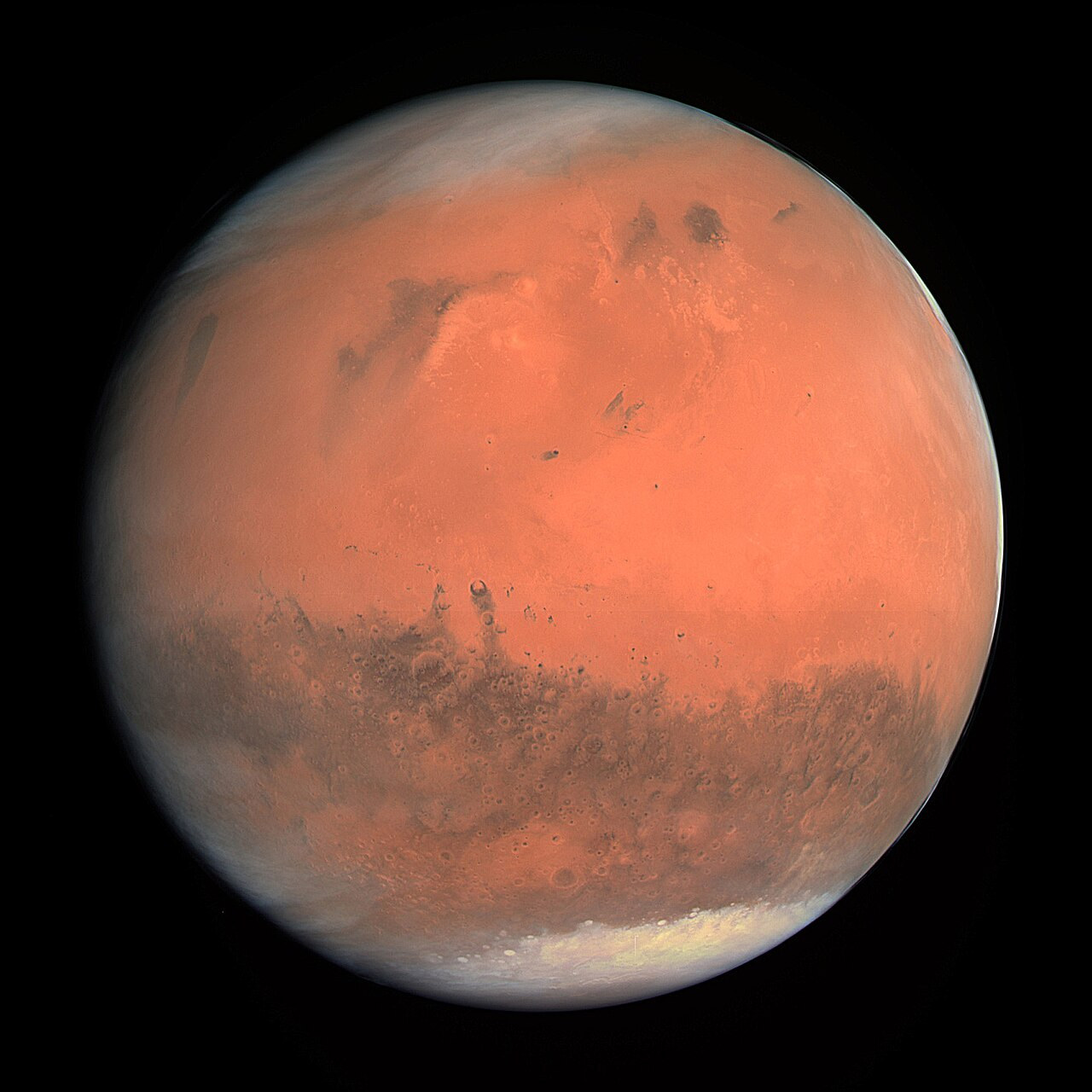
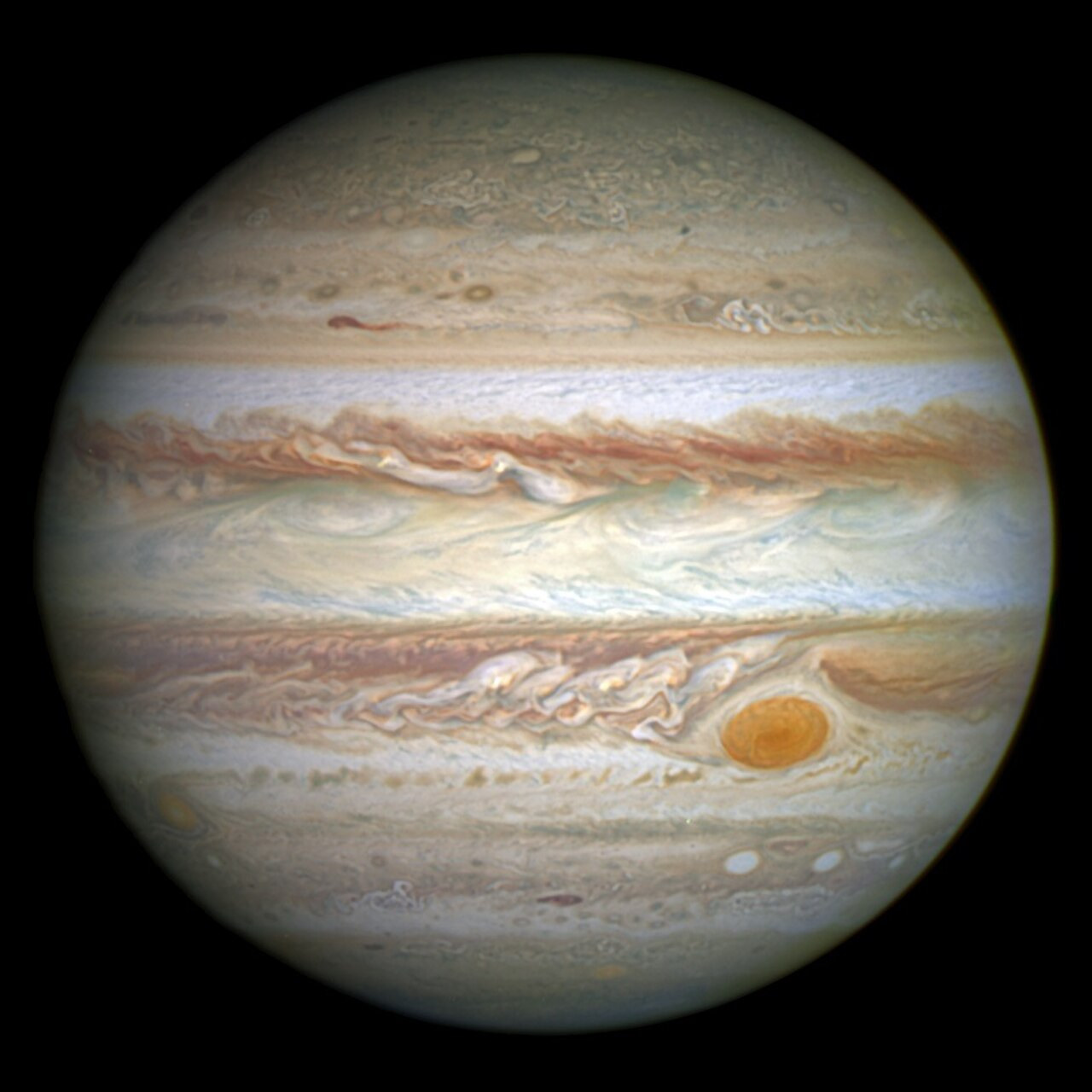
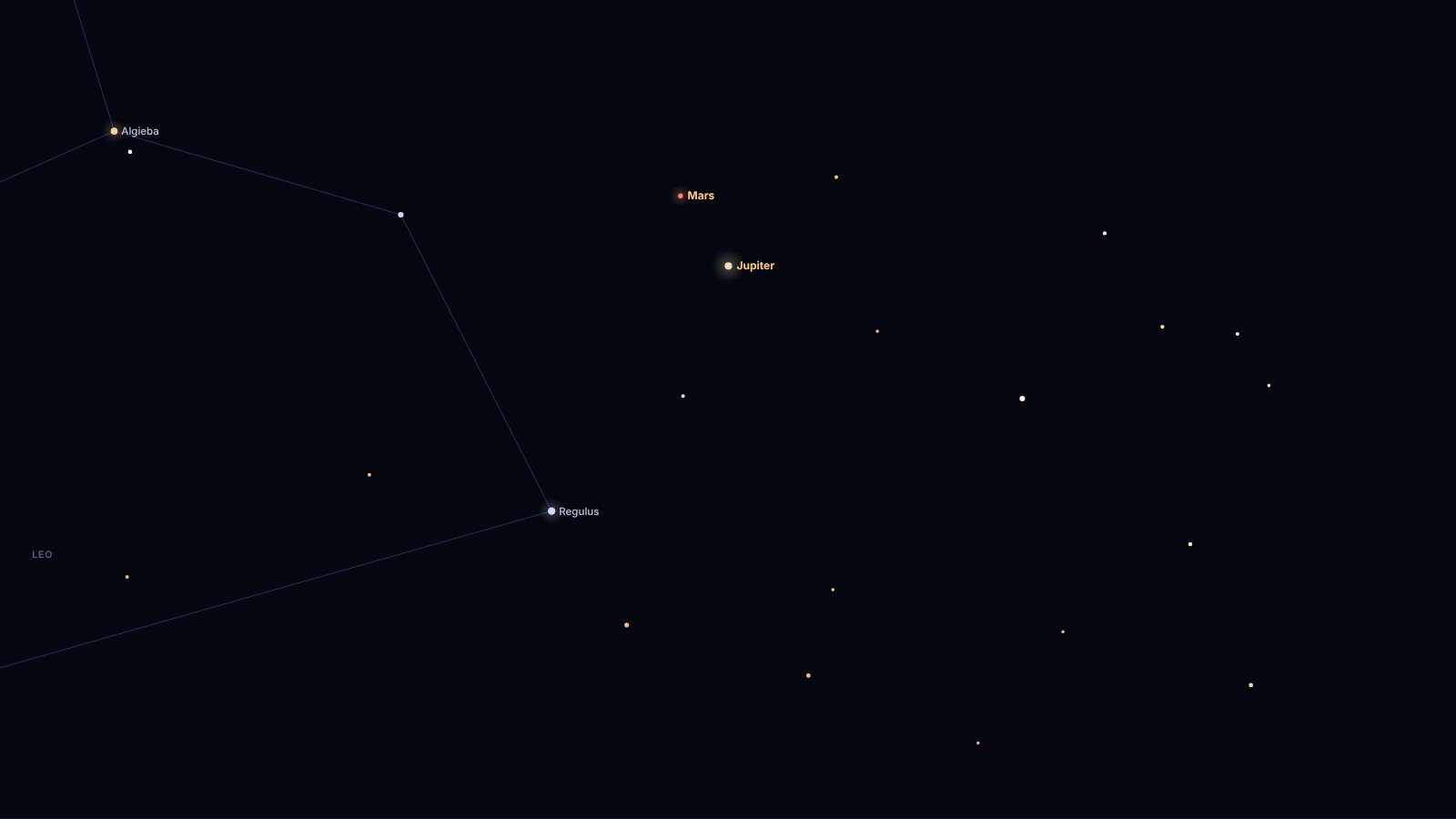
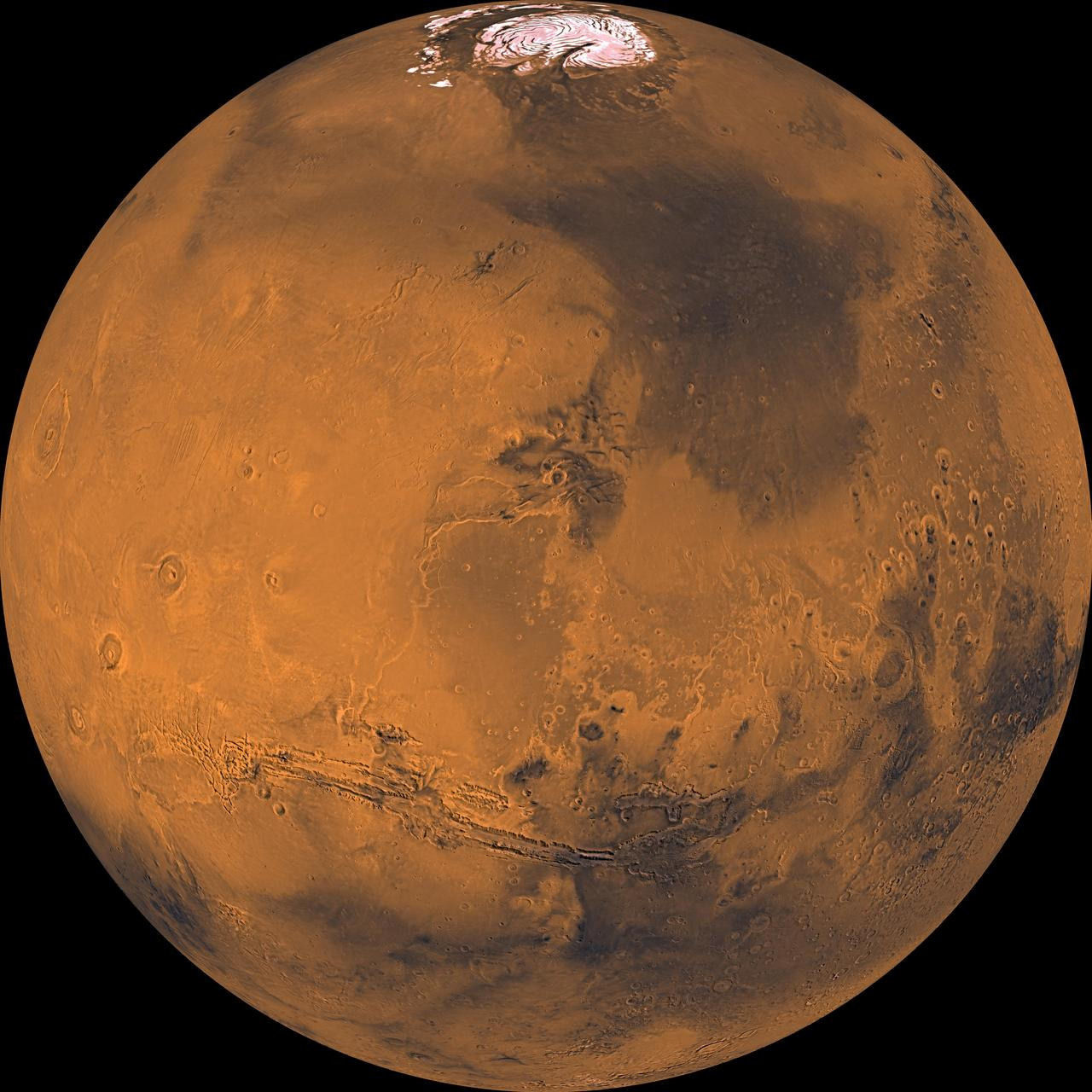
Before sunrise on Nov. 15 and 16, look toward the southeast. Mars and Jupiter will be only about 1.2 degrees apart, a little more than two full Moons side by side. Both are easy to see with your eyes. Jupiter is the brighter one, and Mars has a reddish color.
They are up for most of the night. In New York they rise around 11:15 p.m. and stand about 57 degrees high in the southeast at 4:45 a.m. Your town will see different times.
Find Mars and Jupiter in your skyFree sky map for where you are: when they rise and which way to face.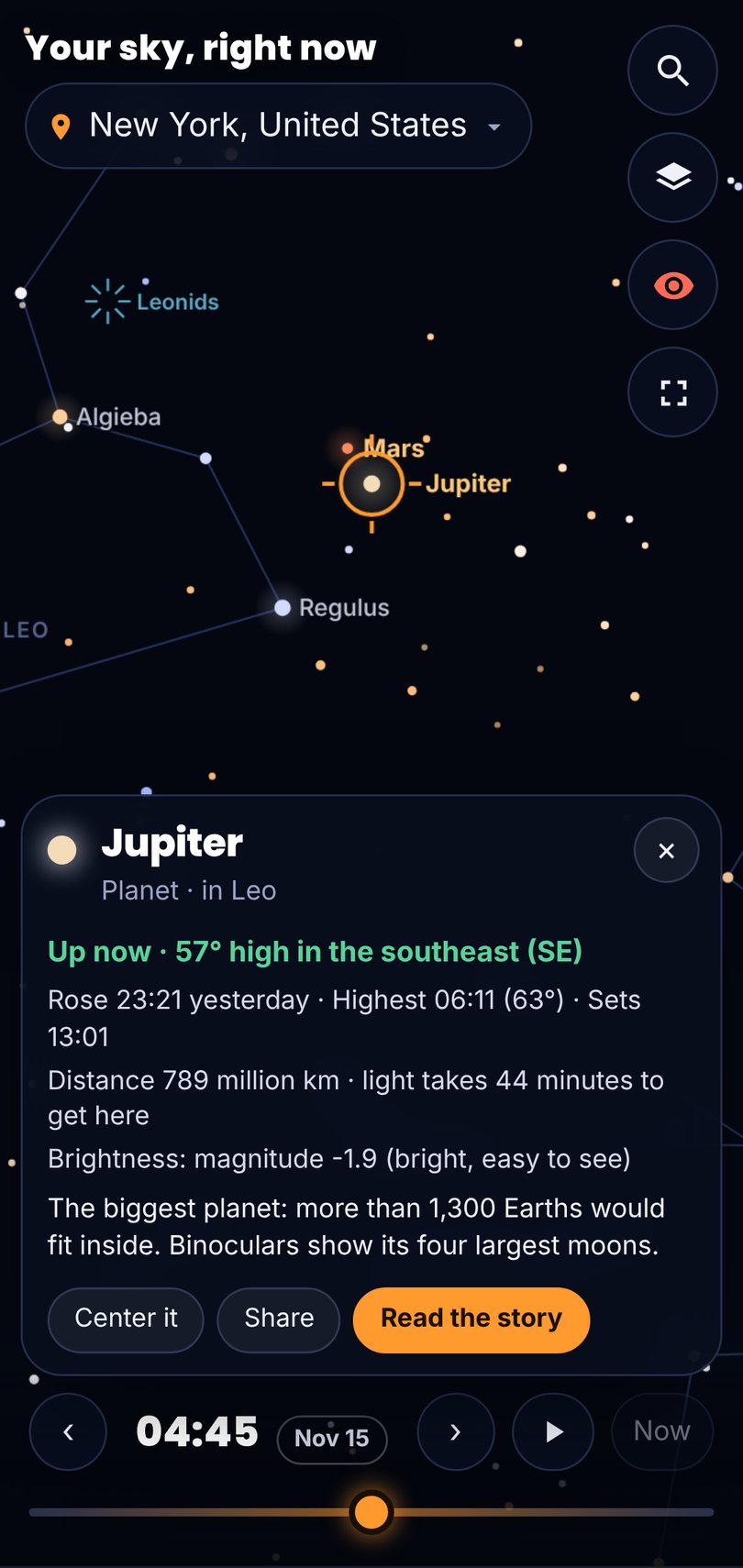
Nov. 17 and 18: the Leonids
The Leonids are best before dawn on Nov. 17 and 18, once the Moon has set. NASA’s guide says ideal conditions could give about 15 meteors an hour, and real counts are usually lower. They seem to come from the constellation Leo, which is high in the sky before sunrise. Get away from streetlights, let your eyes adjust for 20 minutes, and look up. You do not need to stare at Leo itself.
Nov. 24: a supermoon
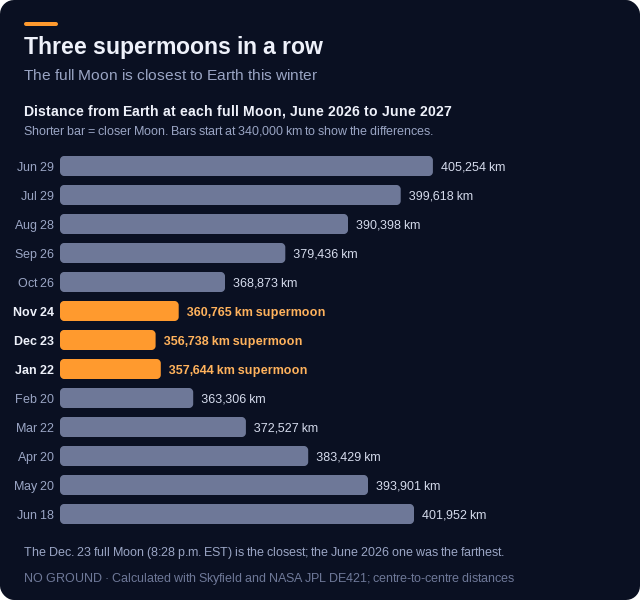
The full Moon on Nov. 24 is a supermoon, and it is the first of three in a row, with the next ones in December and January. The best time to look is around sunset, when the Moon is rising over the eastern horizon and looks biggest next to trees and buildings. That size effect is partly an illusion your brain adds, but it is a good one.
Still ahead: three supermoons
A supermoon is a full Moon that happens when the Moon is near perigee, the closest point of its slightly oval orbit. NASA says the Moon swings between about 363,300 kilometres and 405,500 kilometres from Earth on each 27-day orbit, and that the nearest full Moon of the year can look up to 14 percent bigger and 30 percent brighter than the farthest.
We calculated the distance at every full Moon from June 2026 to June 2027. The Nov. 24 full Moon, at 9:54 a.m. EST, is 360,765 kilometres away. The Dec. 23 full Moon, at 8:28 p.m. EST, is the closest of the year, at 356,738 kilometres, and the Jan. 22 full Moon comes in a close second at 357,644 kilometres. Compare that with the full Moon of June 29, 2026, at 405,254 kilometres. By our numbers, the December Moon is about 14 percent wider in the sky than that one, matching NASA’s rule of thumb.
Honestly, you will not notice the difference without a side-by-side photo. What you will notice is a full Moon rising at sunset, looking huge beside trees and rooftops. That is the Moon illusion, and it works on any full Moon. The Moon is also very slowly drifting away from us, about 3.8 centimetres a year, which we explain in The Moon Is Slowly Leaving Us.
Why Mars and Jupiter paired up, and when they meet again
Planets all orbit the Sun in nearly the same flat plane, so from Earth they all travel along the same narrow band of sky. Faster inner planets keep overtaking slower outer ones. Mars takes about 1.9 years to orbit the Sun and Jupiter about 11.9, so from our point of view Mars catches up with Jupiter and passes it every couple of years. How close they look depends on the small tilts of their orbits, so most meetings are wider than this one.
We ran the numbers with the same planetary data we use for our diagrams. The two came within about 1.2 degrees on Nov. 16, 2026. The next pairing that close comes in July 2029, about 1.6 degrees apart, and in December 2033 they will pass less than half a degree apart. If you missed this one, Jupiter stays bright through the winter. The Moon also moves across the planets every month; we explain how to use darker, moonless nights in our early November sky guide.
Why some Leonid years are spectacular
Every meteor shower is Earth running into dust left by a comet. The Leonids come from comet 55P/Tempel-Tuttle, which takes 33 years to orbit the Sun. The bits hit our atmosphere at about 71 kilometres per second, making them among the fastest meteors. In most years the shower is modest. But about every 33 years, when Earth passes through fresh dust near the comet’s return, NASA says viewers can see a Leonid storm, with hundreds to thousands of meteors an hour. In 1966, thousands of meteors a minute fell during a 15-minute stretch. The last Leonid storm was in 2002.
A few tips
Dress warmer than you think you need to, because meteor watching means standing still. Skip the binoculars for meteors, since your eyes see more of the sky at once. Check the weather the night before, because cloud decides everything. And if you only do one, make it the Mars and Jupiter pairing. It is the easiest, and it takes two minutes.
Bottom line: A quiet meteor shower on Nov. 12, Mars and Jupiter together on Nov. 15 and 16, the Leonids on Nov. 17 and 18, and then three supermoons: Nov. 24, Dec. 23 (the closest) and Jan. 22.
No Ground. Stay curious.